
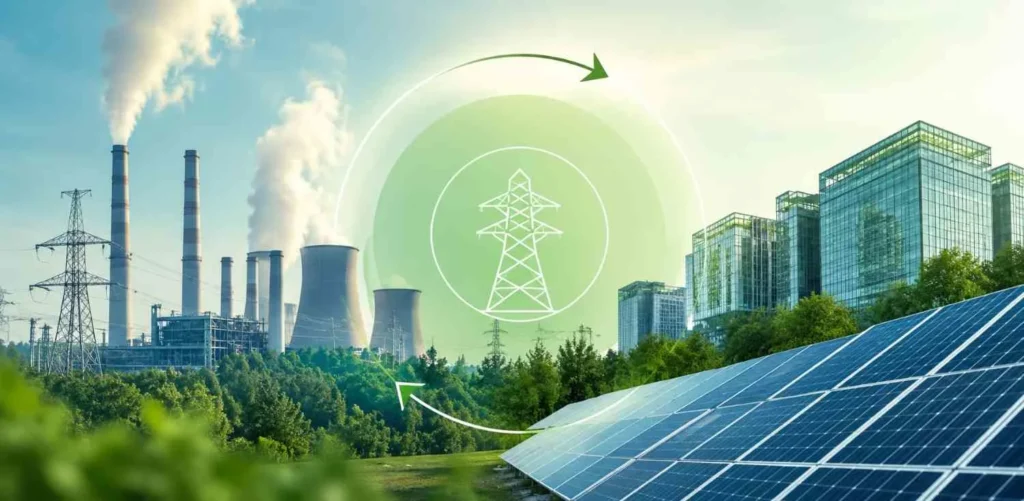
Scope 2 emissions are indirect greenhouse gas emissions resulting from the generation of purchased electricity, steam, heating, or cooling consumed by an organization. Although these emissions physically occur at the energy provider’s facilities, they are attributed to the consuming organisation under the GHG Protocol.
For various businesses, particularly those in manufacturing, data centres, and commercial real estate; Scope 2 emissions represent a significant share of their overall carbon footprint,making them a key focus area for corporate decarbonization efforts. ,.
What Are Scope 2 Emissions?
Scope 2 emissions are indirect greenhouse gas (GHG) emissions from the purchased energy an organization consumes, even though the actual combustion or generation takes place outside its operations. The GHG Protocol attributes these emissions to the buyer because the energy demand drive their generation. For a broader understanding of how Scope 2 fits within the overall emissions profile of an organization, see the Scope 1, 2, and 3 emissions overview.
The “indirect but attributable” concept matters in practice. For example-A factory using grid electricity reportss zero emissions under Scope 1, since the combustion occurs at the power plant. Instead, those emissions fall under Scope 2 because the factory’s electricity consumption creates the demand for power generation. The same principle applies to purchased steam from a district utility, purchased heating from a centralised system, and purchased cooling from a chilled-water network.
For many service-sector and light-manufacturing companies, Scope 2 emissions often exceeds Scope 1 emissions because purchased energy, rather than on-site fuel combustion, accounts for a larger proportion of their operational footprint. Data centres, IT campuses, retail chains, hotels, hospitals, and commercial real estate are all dominated by Scope 2 emissions. As a result, Scope 2 emissions receive significant, attention in their disclosure reports.
Examples of Scope 2 Emissions
Scope 2 emissions arise wherever a company consumes energy generated outside its operational boundary. Under the GHG Protocol, these emissions are categorised based on four types of purchased energy commonly used by industrial and commercial organisations. The table below outlines each energy source, along with its description and a real-world example, to help distinguish Scope 2 emissions from other emissions categories.
| Energy Source | Description | Example |
| Purchased electricity | Grid-supplied power consumed by facilities | Manufacturing plants, offices, retail outlets |
| Purchased steam | team supplied by a centralised system for heating or industrial processes | Industrial parks, refineries, chemical clusters |
| Purchased heating | District heating systems | Warehouses, large campuses, residential complexes |
| Purchased cooling | District cooling systems | Data centres, commercial buildings, IT parks |
Why Scope 2 Emissions Matter and How They Are Calculated
Scope 2 emissions are often the largest reported source for greenhouse gas emissions for service-sector and light-manufacturing companies, since operational energy use accounts for a significant share of their operational footprint. For these companies, reducing Scope 2 emissions not only supports regulatory compliance and corporate climate goals but can also lower operating costs, since energy consumption and emissions intensity are closely linked.
Why Scope 2 Matters
Scope 2 emissions are a mandatory category under leading sustainability and climate disclosure frameworks. For instance-India’s BRSR framework, the GHG Protocol Corporate Standard, CDP, GRI, and the EU CSRD; require Scope 2 reporting alongside Scope 1 emissions. Rising grid emission factors, volatile energy prices, and increasing stringent renewable energy standards have made Scope 2 a strategic focus for decarbonisation, particularly for energy-intensive operations.
How Scope 2 Is Calculated
The GHG Protocol requires organizations to calculate and report Scope 2 emissions using two two complementary methods. These methods are reported in parallel rather than as alternatives, as each provides a different perspective on an organisation’s electricity-related emissions..
| Method | What It Represents | When It’s Used |
| Location-based | Average grid emission factor for the region where electricity is consumed | Reflects the physical emissions associated with the local electricity grid |
| Market-based | Contract-specific energy sourcing | Reflects the impact of renewable electricity procurement through instruments such asPPAs, and Renewable Energy Certificates (RECs) |
Both methods are required under the GHG Protocol Scope 2 Guidance. Disclosure frameworks require companies to report both methods, since each provides a distinct perspective on an organisation’s Scope 2 emissions and decarbonisation efforts
How Companies Can Reduce Scope 2 Emissions
Reducing Scope 2 emissions involves both decreasing total energy consumption and transitioning from carbon-intensive grid power to lower-carbon alternatives. These reduction strategies fall into two operational categories: consumption-side actions that reduce electricity demand and procurement-side actions that reduce the emissions associated with purchased energy.
For sector-specific strategies, refer to automotive carbon emissions reduction guide for industrial operations.
Consumption Levers
- Energy efficiency improvements: upgrading building envelopes, installing high-efficiency lighting, optimizing HVAC systems, and process heat recovery reduce electricity consumption per unit of output.
- Demand-side management: shifting energy use to off-peak hours and participating in grid-balancing programmes can reduce exposure to periods of higher grid emission factors.
- On-site renewables: installing rooftop solar or behind-the-meter wind systems reduces reliance on purchased grid electricity, thereby lowering Scope 2 emissions.
Procurement Levers
- Power Purchase Agreements (PPAs): long-term contracts with renewable energy generators offering low-emission electricity, while offering greater price certainty.
- Renewable Energy Certificates (RECs): tradable instruments representing the environmental attributes of renewable generation, used in the market-based Scope 2 calculation.
- Green tariffs: renewable electricity supply options offered by utilities for organisations that prefer not to enter into bilateral PPAs.
Scope 2 in Automotive Operations, Renewable Claims, and Net Zero Alignment
Scope 2 emissions are a foundational lever for automotive manufacturers and other electricity-intensive industries. Energy-intensive operations such as paint shops, body presses, and robotic assembly lines contribute significantly to Scope 2 emissions, while warehouses and testing facilities add to overall electricity consumption. Most companies persuing net zero targets prioritize Scope 2 emissions reduction as a practical mid-term decarbonisation lever ahead of theScope 3 horizon.
Renewable Claims and Data Integrity
Credible renewable energy claims rest on the difference between physical electricity supply and contractual attribution. A Power Purchase Agreement (PPA) contracts the renewable attributes to a specific buyer, while a green-tariff or an unbundled REC represents a contractual claim to renewable electricity rather than a direct physical supply.
Disclosure frameworks are also raising expectations around bundled, geographically-matched, and time-matched renewable energy claims, in response to concerns about double counting. Hourly matching standards and geographic proximity rules are emerging as the next layer of disclosure rigour.
Net Zero Alignment
Scope 2 reductions typically precede Scope 3 emissions in net zero pathways because organizations have greater control over their energy procurement decisions. Accordingly, most net zero frameworks treat Scope 2 as a practical mid-term decarbonization opportunity, with carbon offsets used only for residual emissions that remain after all feasible emission reduction measures have been implemented.
Conclusion
Scope 2 emissions are the bridge between an organization’s operations and the transition to cleaner energy . Often the largest source of reported corporate emissions, Scope 2 is directly influenced by energy procurement decisions: renewable energy contracts, on-site generation, and energy efficiency measures can together deliver near-term emission reductions.
Mandatory under major sustainability disclosure frameworks, Scope 2 follows Scope 1 in the corporate emissions inventory and provides the foundation for addressing Scope 3 emissions across the value chain. Voluntary carbon credits, including Cercarbono-certified ELV carbon credits are reserved for residual emissions after organisations have prioritised emission reduction measures.
FAQs
Are Scope 2 emissions direct or indirect?
Scope 2 emissions are indirect greenhouse gas emissions. Although they occur at the facilities of an energy provider, they are attributed to the purchasing organisation under the GHG Protocol because its energy consumption drives the demand for electricity, steam, heating, or cooling generation.
What is the difference between Scope 1 and Scope 2 emissions?
Scope 1 covers direct emissions from sources that a company owns or operationally controls. Scope 2 covers indirect emissions from purchased electricity, steam, heating, and cooling generated outside the organisation’s operational boundary. Consequently, reducing Scope 1 emissions typically requires changes to fuels or equipment, whereas reducing Scope 2 emissions focuses on energy efficiency and cleaner energy procurement..
What is the location-based method for Scope 2?
The location-based method calculates Scope 2 emissions using the average grid emission factor of the geography where energy is consumed. It reflects the carbon intensity of the local electricity grid, regardless of whether the organisation has purchased renewable electricity through contractual arrangements. The GHG Protocol requires organizations to report this method to provide a consistent representation of grid-related emissions.
What is the market-based method for Scope 2?
The market-based method calculates Scope 2 emissions using contract-specific information on purchased electricity, including Power Purchase Agreements, Renewable Energy Certificates (RECs), and green tariffs. It reflects the organization’s procurement decisions and renewable electricity purchases. Under the GHG Protocol, both the location-based and market-based methods must be reported.
Are renewable energy certificates counted under Scope 2?
Yes, RECs count under the market-based Scope 2 calculation. They represent the environmental attributes of renewable electricity generation, and enable organisations to reflect their renewable electricity procurement in market-based Scope 2 reporting.To enhance the credibility of renewable energy claims, disclosure frameworks expect RECs to be bundled, geographically matched, and time-matched where feasible.
How do Scope 2 emissions impact net zero targets?
Reducing Scope 2 emissions is a key component of a credible net zero strategy because purchased energy is often one of the largest controllable sources of corporate emissions. Most science-based pathways prioritise substantial Scope 2 reductions through renewable electricity procurement, on-site renewable energy generation, and energy efficiency improvements. Carbon offsets are not a substitute for direct emissions reductions and should be used only to address residual emissions after all feasible reduction measures have been implemented..