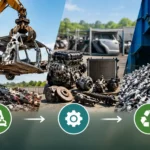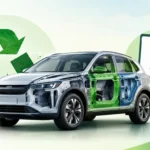

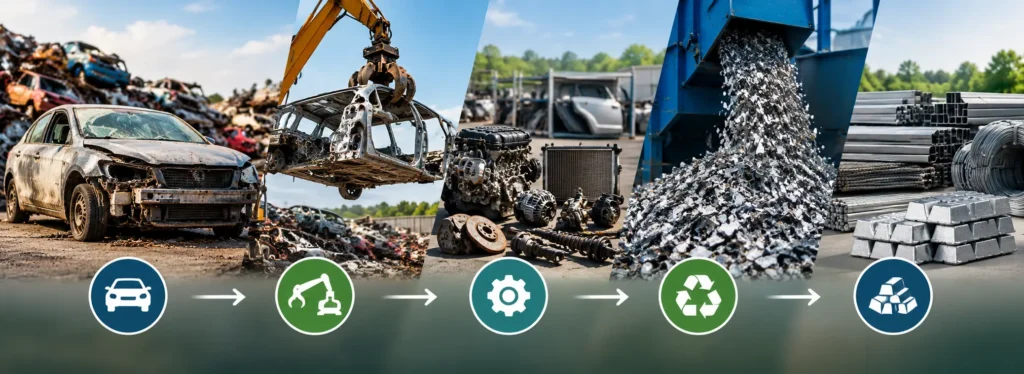
When a car reaches an authorised Registered Vehicle Scrapping Facility, the scrapping process begins with depollution, followed by dismantling and the recovery of reusable parts and materials. Fluids and other hazardous components are removed for safe handling, while metals are separated for recycling and use in manufacturing.
The paperwork progresses alongside the physical process. When the RVSF accepts the vehicle, it issues a Certificate of Deposit (CoD), which records the transfer of ownership to the registered scrapper. Once the vehicle has undergone the necessary treatment, the facility issues a Certificate of Vehicle Scrapping (CVS), accompanied by a photograph of the cut-out chassis. The CVS supports the update or cancellation of the vehicle’s registration records in VAHAN through the relevant authority.
The Motor Vehicles (Registration and Functions of Vehicle Scrapping Facility) Rules, 2021, as amended, govern RVSF operations and documentation. The Environment Protection (End-of-Life Vehicles) Rules, 2025, set out the environmental and extended producer responsibility requirements for end-of-life vehicles.
Depollution: Removing Hazardous Materials from a Scrapped Car
The first stage in India’s car scrapping process is making the vehicle environmentally safe. Before any dismantling begins, the facility extracts all hazardous fluids and removes components that pose fire or contamination risks. This step is governed by Automotive Industry Standard 129 (AIS-129), notified by the Ministry of Road Transport and Highways (MoRTH), which sets the technical protocol for end-of-life vehicle (ELV) processing in India.
The following fluids and components are removed first:
- Engine oil, transmission fluid, brake fluid, coolant, power steering fluid, and air-conditioning refrigerant are drained into sealed containers for re-refining or hazardous-waste disposal under Central Pollution Control Board (CPCB) protocols.
- The fuel tank is emptied and residual petrol or diesel is recovered.
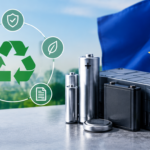
- The battery, whether lead-acid or lithium-ion, is removed and transferred onward through the authorised recycling channel that applies to it under the Battery Waste Management Rules, 2022.
- Airbags are deployed or removed safely, since undeployed inflators contain explosive material.
- Mercury switches in older vehicles, catalytic converter substrates, and oil filters are flagged for separate handling.
Depollution separates an authorised RVSF from an informal scrapyard, where fluids are routinely dumped and batteries broken open without containment.
Salvaging Reusable Parts from a Scrapped Car
Once the vehicle is depolluted, technicians identify and remove parts that retain working value. Salvage extends the economic life of components and reduces demand for new manufacturing, but it must be documented carefully to prevent fraud.
RVSFs facilities maintain records of the vehicles they receive and of the material that flows out of them. Records at the level of individual reusable parts are less settled, however, because India’s formal market for reusable and refurbished end-of-life vehicle spare parts is still developing, and traceability and certification systems for those parts remain areas for improvement.
Components typically harvested for resale or refurbishment include:
- Engine and gearbox assemblies, refurbished or sold as spare parts
- Alternators, starters, ECUs, and wiring harnesses
- Catalytic converters, which contain platinum, palladium, and rhodium recovered for industrial reuse
- Headlights, tail lights, mirrors, and undamaged body panels
- Seats, wheels, tyres in usable condition, and infotainment units
Catalytic converters are often among the most valuable components recovered from a scrapped vehicle relative to their weight. Their internal substrate contains platinum-group metals, including platinum, palladium and rhodium, which have significant recovery value. The converter is therefore removed separately before the vehicle enters the shredder, allowing these metals to be recovered without mixing the component with the rest of the vehicle’s scrap.
Shredding and Sorting Materials from a Scrapped Car
After depollution and parts salvage, the stripped shell moves into industrial processing. This stage uses heavy mechanical equipment and modern sorting technology, producing the bulk of the recoverable material value in any vehicle dismantling and recycling operation.
Compression and Industrial Shredding
The stripped chassis is fed into a hydraulic press that compacts it into a flat block, then routed into an industrial shredder that tears the block into fist-sized fragments within seconds. Shredder hammers generate the centrifugal force needed to break welded joints and separate metals from glass and plastic.
Sorting by Material Type
The shredded mixture is then separated using a combination of magnetic, eddy-current, and optical systems. Powerful electromagnets pull out ferrous metals, primarily steel and iron, into one stream. Eddy-current separators induce electric fields that push non-ferrous metals like aluminium and copper into a different stream. Optical sensors and air-density separators then sort the remaining shred into plastics, glass, rubber, and residual foam.
Steel is the largest recoverable fraction by weight in a typical Indian passenger car. The International Council on Clean Transportation’s (ICCT) March 2025 brief on Indian automotive steel recycling identifies scaling authorised dismantling capacity as the biggest lever for closing India’s steel circularity loop.
Reintegrating Recovered Materials into the Circular Economy
The sorted material streams from the shredder do not stay as scrap. They re-enter manufacturing as secondary raw materials, displacing virgin extraction and lowering the carbon intensity of new products. This is the core idea of car recycling circular economy thinking, which underpins the broader circular economy in the automotive industry in India.
| Material recovered | What it becomes next |
| Steel (largest fraction by weight) | New vehicle body panels, structural steel for construction, appliances |
| Aluminium | Auto components, beverage cans, construction extrusions (read more: aluminium recycling in automotive) |
| Copper (wiring harnesses) | Electrical cables, motor windings, plumbing |
| Plastics (bumpers, dashboards) | Automotive interior parts, consumer goods |
| Glass (windshields, windows) | Recovered glass and cullet, with selected construction or industrial uses depending on how the glass is processed |
| Rubber (tyres) | Crumb rubber for road surfacing, playground flooring, industrial mats |
| Catalytic converter precious metals | New catalytic converters, industrial catalysts |
Recycling steel generally requires substantially less energy than producing it from virgin iron ore, which reduces the resource use and the emissions associated with each tonne of steel that returns to manufacturing.
Deregistration and Documentation After a Car Is Scrapped
Scrapping a car involves two separate documentation milestones. The Registered Vehicle Scrapping Facility (RVSF) issues a Certificate of Deposit (CoD) when it accepts the vehicle, then issues a Certificate of Vehicle Scrapping (CVS) after completing the required treatment. The CVS supports the subsequent update or cancellation of the vehicle’s registration records.
1. Certificate of Deposit: Ownership Transfer and Incentives
The CoD is issued when the vehicle is handed over to the RVSF. It records the transfer of ownership to the Registered Scrapper and allows the owner to claim applicable scrappage incentives when purchasing a replacement vehicle.
These incentives may include:
- Road-tax concession: Up to 25% for non-transport vehicles and up to 15% for transport vehicles under the central framework, subject to applicable conditions.
- Registration fee waiver: Waiver of the applicable registration fee on the new vehicle.
- Manufacturer discount: An additional discount, if offered by the vehicle manufacturer under its prevailing scrappage scheme.
The concession and discount available depend on the applicable rules and the manufacturer’s scheme.
2. Certificate of Vehicle Scrapping: Completion of Treatment
After issuing the CoD, the RVSF proceeds with depollution, dismantling and the necessary treatment of the vehicle. Once these operations are complete, it issues the CVS with a photograph of the cut-out chassis.
The CVS documents the completion of scrapping and provides the supporting evidence needed to update or cancel the vehicle’s registration records.
3. VAHAN Update and Registration Closure
The CVS is used to process the vehicle’s deregistration through VAHAN and the relevant registration authority. This closes the vehicle’s registration record following physical scrapping.
The CoD and CVS therefore serve different purposes: the CoD records the transfer of ownership at handover, while the CVS confirms that the vehicle has undergone the required treatment.
4. Payment for the Scrapped Vehicle
The owner also receives payment for the vehicle’s scrap value. The amount depends on the agreed terms, the vehicle’s weight, the materials recovered and prevailing scrap rates. This payment is separate from any tax concessions, registration fee waivers or manufacturer discounts available through the scrappage framework.
An authorised RVSF provides the documentation required for these formalities. An informal dismantler cannot issue a CoD or CVS under the RVSF Rules.
Conclusion
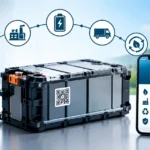
When a car is scrapped at an authorised RVSF, a large share of its materials can be recovered, while the hazardous and non-recyclable fractions are managed separately. It is made safe through de-pollution, stripped of reusable parts, shredded and sorted into clean material streams, and channelled back into manufacturing as secondary raw material, while paperwork retires the vehicle and rewards the owner with a Certificate of Deposit. The traceability behind this loop runs on platforms like MMCM’s AutoLoop, the cloud-based system that authorised RVSFs use to capture AIS-129 compliance data and integrate with VAHAN. Scrapping is not the end of the car; it is the start of its materials’ second life.
FAQs
How long does the entire car scrapping process take?
Once the vehicle is handed over to an authorised RVSF, the scrapping process typically takes 5 to 10 working days from inspection to Certificate of Deposit issuance, depending on facility throughput. The VAHAN deregistration is completed within 14 days of physical scrapping under the MoRTH framework, after which the owner is formally clear of legal liability for the vehicle.
What percentage of a car can actually be recycled?
Industry estimates indicate approximately 85 to 90 percent of a passenger car’s material content can be recovered at an authorised RVSF, with steel the largest fraction by weight. The remaining 10 to 15 percent is automotive shredder residue, comprising mixed plastics and composites. Where recovery and recycling activities qualify under an eligible carbon project, they can also generate quantified emission reductions, and Cercarbono’s CM-WM-ELV-01 methodology provides a framework for certifying those reductions as ELV carbon credits.
Can parts salvaged from my scrapped car be resold legally?
Reusable parts can carry significant recovery value, but the formal framework for reselling and certifying salvaged end-of-life vehicle components in India is still developing. NITI Aayog’s January 2026 report points to regulatory restrictions, the absence of established certification systems and limited traceability for salvaged spare parts, so whether a particular part can be resold, and on what documentation, depends on the component and the regulations that apply to it.
What happens to the catalytic converter when a car is scrapped?
The catalytic converter is removed at the parts-salvage stage and routed to a specialised refiner. Its ceramic substrate contains platinum, palladium, and rhodium, which are recovered through high-temperature processing and returned to industrial supply chains, including the manufacturing of new catalytic converters. Catalytic converter theft is a known issue in informal scrapyards, which is why authorised RVSFs log them against the chassis number.
Is my car safe from being misused after it is scrapped?
Yes, when scrapped at an authorised RVSF. The original Registration Certificate is physically defaced or punched in your presence, the VAHAN database is updated to deregister the vehicle, and the chassis is shredded so it cannot be re-bodied. Informal scrapping does not deregister, leaving the registered owner exposed to misuse of parts or fraudulent re-registration.
Do I get any money for my scrapped car beyond the Certificate of Deposit?
Yes. In addition to the CoD, an authorised RVSF pays a scrap value calculated on the vehicle’s verified weight and material content, typically 4 to 6 percent of an equivalent new vehicle’s ex-showroom price for a private car. The payment is transferred to the bank account named on the affidavit submitted with the scrapping application, generally within 7 to 10 working days.
What is the difference between authorised RVSF scrapping and informal scrapping when it comes to what happens to scrapped cars?
An authorised RVSF is a facility registered under the Motor Vehicles (Registration and Functions of Vehicle Scrapping Facility) Rules, and it is required to follow the applicable CPCB environmental requirements and AIS-129. It is connected to VAHAN, issues the Certificate of Deposit at handover and the Certificate of Vehicle Scrapping after treatment, and so enables the registration to be cancelled. Informal scrapyards issue no CoD, do not deregister the vehicle, and typically dump fluids and batteries unsafely.