

Carbon insetting and offsetting are two complementary approaches that organizations use to address greenhouse gas emissions, but they differ in where the climate action takes place. Carbon insetting focuses on emission reduction or removal within a company’s own value chain, whereas carbon offsetting involves purchasing and retiring verified carbon credits generated by climate projects outside the company’s value chain to compensate for emissions that cannot yet be eliminated.
Rather than competing approaches, the two are increasingly used together in credible corporate climate strategies, with organisations encouraged to prioritise direct emission reductions within their value chains before using high-integrity carbon credits as a complementary climate action.
What Is Carbon Insetting?
Carbon insetting means investing in emission reduction or removal activities within a company’s own value chain rather than outside it. These initiatives help reduce greenhouse gas (GHG) emissions at the source by improving the sustainability of upstream suppliers, manufacturing processes, logistics, or downstream activities. Unlike carbon offsetting, where climate action occurs outside the value chain, insetting integrates decarbonisation directly into business operations and supply chains.
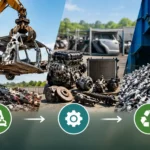
For example, an automotive original equipment manufacturer (OEM) may support an aluminium supplier in transitioning to renewable energy or replace virgin steel with recycled steel recovered from end-of-life vehicles (ELVs). Since these actions occur within the company’s value chain, they can contribute to reducing its value chain emissions, particularly Scope 3 emissions.
In plain terms: carbon insetting means investing in climate solutions within the businesses, suppliers, or operations that are already part of your value chain, so the environmental benefits directly support your own decarbonisation efforts.
Common carbon insetting examples include:
- Supporting Tier-1 and Tier-2 suppliers switch to renewable energy.
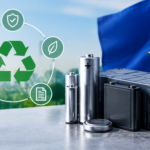
- Substituting recycled-content steel, aluminium, or plastic in manufacturing.
- Transitioning inbound and outbound logistics to lower-carbon transport modes, such as biofuels, electric fleets, or rail.
- Implementing agroforestry or regenerative agriculture programmes within agricultural supply chains
- Promoting circular design and material recovery that reduce embedded emissions in new products
Because carbon insetting focuses on activities within a company’s value chain, it supports direct emission reductions where products and services are sourced, manufactured, or transported. When measured and accounted for using recognised greenhouse gas accounting principles, these initiatives can contribute to reducing a company’s reported value chain emissions and support progress towards its corporate climate targets.
As organisations place greater emphasis on value chain decarbonisation, carbon insetting is increasingly being recognised as an important complement to broader climate strategies. It not only helps reduce emissions but can also strengthen supplier engagement, improve resource efficiency, enhance supply chain resilience, and support long-term business sustainability. While carbon offsetting remains an important tool for compensating emissions, reducing emissions within the value chain is generally considered the first priority under widely accepted corporate climate mitigation approaches.
What Is Carbon Offsetting?
Carbon offsetting is the practice of compensating for greenhouse gas emissions (GHG) by purchasing and retiring verified carbon credits generated by climate projects outside a company’s own value chain. These projects reduce, avoid, or remove emissions from the atmosphere, enabling organisations to compensate for a corresponding amount of their own emissions.
Under internationally recognised voluntary carbon market standards, one carbon credit represents one metric tonne of carbon dioxide equivalent (tCO₂e) that has been avoided, reduced, or removed and independently verified. Once a carbon credit is retired, it cannot be used again, ensuring that the associated climate benefit is claimed only once.
Common carbon offsetting examples for businesses include supporting renewable energy projects, reforestation and afforestation initiatives, methane capture from landfills, improved waste management systems, or other verified emission reduction and removal projects. While these initiatives help mitigate global greenhouse gas emissions, they do not directly reduce the emissions generated within the purchasing company’s own operations or value chain.
Independent carbon registries like Verra, Gold Standard, and Cercarbono establish standards and procedures to ensure that carbon credits represent measurable and credible climate benefits. The environmental integrity of a carbon credit depends on factors such as additionality, permanence, and verified measurement. Consequently, not all carbon credits are of the same quality, making due diligence essential when selecting credits for offsetting purposes.
Carbon offsetting is widely recognised as a complementary climate action rather than a replacement for direct emission reductions. One of the key advantages of offsetting is its flexibility, allowing companies to support verified climate action immediately while longer-term emission reduction initiatives are being implemented.
Differences Between Carbon Insetting and Offsetting
Although both carbon insetting and carbon offsetting support climate action, they serve different purposes within a corporate sustainability strategy. Carbon insetting focuses on reducing emissions within a company’s own value chain, whereas carbon offsetting compensates for emissions by supporting verified climate projects outside the value chain. Understanding the distinction between the two helps organisations develop a balanced and credible decarbonisation strategy.
| Factor | Insetting | Offsetting |
| Project location | Within the company’s own value chain | Outside the company’s value chain |
| Impact on emissions | Helps reduce value chain emissions, particularly Scope 3 | Does not directly reduce company’s own emissions but compensates for them |
| Implementation | Requires operational changes, supplier collaboration, and long-term planning | Can be implemented immediately through the purchase and retirement of verified carbon credits |
| Alignment with climate strategy | Supports direct decarbonisation within the company’s value chain | Complements broader decarbonisation efforts by addressing emissions through external climate projects |
| Additional business benefits | Improves supplier engagement, resource efficiency, circularity, and supply chain resilience | Supports a diverse portfolio of global climate, biodiversity, and community development projects |
So to summarize it: insetting reduces emissions within your own value chain; whereas carbon offsetting compensates for emissions through verified climate projects outside your value chain.
For companies with extensive and traceable supply chains (such as automotive OEMs, apparel manufacturers, food and beverage companies),the choice is rarely an either-or decision. Carbon insetting reduces emissions within the value chain, while carbon offsetting complements these efforts through verified climate projects outside the value chain. Together, they form a balanced corporate climate strategy.
How Can OEMs Choose Between Carbon Insetting and Offsetting
For automotive OEMs, the choice between carbon insetting and offsetting depends on where emissions can be reduced most effectively. If there are practical opportunities to reduce emissions within the value chain, insetting should be prioritised. Where direct reductions are not yet feasible, high-integrity carbon offsets can complement broader decarbonisation efforts.
H3: Where insetting fits OEMs well
Automotive OEMs have significant Scope 3 emissions, particularly from steel, aluminium, batteries, and logistics, making these areas well suited for carbon insetting. Common opportunities include :
- Increasing recycled-content steel and aluminium in new vehicles
- Recovering critical materials from end-of-life vehicles for reuse in production
- Transitioning inbound and outbound logistics to lower-carbon transport
- Supporting renewable energy adoption across the supplier network
Corporate climate frameworks, including the SBTi, encourage organisations to prioritise direct emission reductions across their operations and value chains before relying on carbon credits.
Where offsetting still fits
Despite strong insetting initiatives, some emissions may remain difficult to reduce due to current technological or operational limitations. High-integrity carbon credits can fill this gap while lower-carbon technologies continue to develop. This is the typical entry point for carbon offsetting for business at OEMs with credible insetting under way.
However, carbon offsetting should complement, and not replace the efforts to reduce emissions within an organisation’s own value chain. Relying solely on offsets without a credible emission reduction strategy may weaken the credibility of a company’s climate claims, and fall short of stakeholder expectations and evolving sustainability reporting frameworks.
The practical sequence
A credible approach for OEMs follows a clear sequence: measure Scope 3 emissions, identify insetting opportunities across material sourcing (such as steel, aluminium and batteries), and logistics, invest in these opportunities first, and use high-integrity verified carbon credits to complement these efforts where further emission reductions are not currently feasible. Understanding how carbon credits work helps OEMs select high-integrity credits that support credible corporate climate strategies. This sequence forms the foundation of many corporate decarbonization and net zero roadmaps adopted by automakers.
The economics further reinforce this approach. A tonne of value-chain emission reduction achieved through recycled-content steel or renewable energy adoption at a Tier supplier can deliver long-term environmental and business value while contributing to supply chain resilience.
Conclusion
Carbon insetting and offsetting are complementary tools, not competing approaches. Carbon insetting focuses on real reductions within a company’s own value chain, while carbon offsetting enables organisations to compensate for emissions through high-integrity verified carbon credits generated by projects outside their value chain.
The most credible corporate climate strategies prioritise measuring Scope 3 emissions, identifying and implementing value chain emission reduction opportunities, and then using high-integrity verified carbon credits to complement these efforts where further emission reductions are not currently feasible. The choice is not one or the other, but understanding how both approaches work together to support long-term decarbonisation.
FAQs
Is carbon insetting better than offsetting?
Both serve different purposes. Carbon insetting reduces emissions within a company’s value chain, while carbon offsetting compensates for emissions through verified climate projects outside the value chain. The most effective climate strategies prioritise emission reductions first and use high-integrity carbon credits to complement these efforts.
What is an example of carbon insetting?
Common carbon insetting examples include OEMs sourcing recycled steel or aluminium for new vehicles, funding renewable energy at tier suppliers, or transitioning inbound logistics to biofuels or electric fleets.
Does carbon insetting require verification?
Yes. Carbon insetting should be supported by robust measurement, monitoring, and reporting. Depending on the programme or corporate requirements, independent verification may also be required to demonstrate credible emission reductions.
Can a company do both insetting and offsetting?
Yes. Many organisations reduce emissions within their value chain through insetting and use high-integrity carbon credits to complement these efforts where further emission reductions are not currently feasible.
How does insetting affect Scope 3 emissions?
Carbon insetting helps reduce Scope 3 emissions by lowering the carbon footprint of purchased materials, supplier operations, logistics, and other value chain activities.
Why is offsetting criticised as a licence to pollute?
Some critics argue that relying heavily on offsets without reducing a company’s own emissions can weaken the credibility of climate claims. Offsetting is most effective when used alongside a credible emission reduction strategy.
Do I need to measure Scope 3 before insetting?
Yes. Measuring Scope 3 emissions helps identify the largest emission sources, prioritise insetting opportunities, and track progress over time.
How do carbon credits from circularity fit into insetting and offsetting?
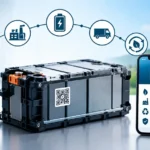
Recovered materials from end-of-life vehicles (ELVs) reintegrated into an OEM’s supply chain can support carbon insetting. Conversely, Cercarbono-certified ELV carbon credits, generated through authorised RVSFs, integrating digital monitoring and verification (dMRV) systems, can be used as high-integrity carbon credits for carbon carbon offsetting.