
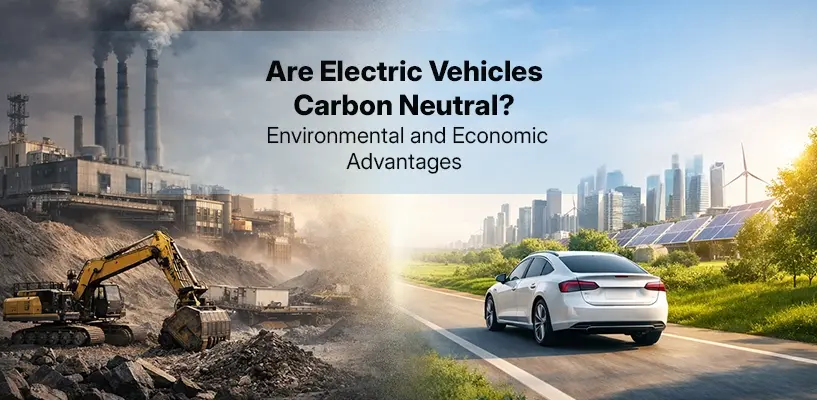
Electric vehicles are often positioned as zero emission solutions, but that claim only applies to what happens on the road. A deeper look shows that emissions exist across the entire lifecycle, starting from raw material extraction to manufacturing, charging, and recycling. This creates what many call a carbon debt at the production stage.
An electric vehicle’s carbon footprint requires a lifecycle view rather than a usage based view. EV lifecycle emissions help determine whether EVs are better for climate when compared to traditional vehicles and under what conditions they deliver real emission reductions.
Are Electric Vehicles Carbon Neutral?
The short answer is no, at least not today. Electric vehicles are not carbon neutral when assessed across their full lifecycle.
A clear distinction needs to be made between operational emissions and lifecycle emissions. EVs produce zero tailpipe emissions during driving. This gives them an advantage in urban environments. However, emissions occur before and after that phase.
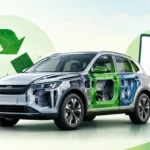
Lifecycle emissions include battery production, vehicle manufacturing, electricity generation, and end of life processing. These combined factors define the real environmental impact of EVs.
From an emissions accounting perspective, EVs shift emissions rather than eliminate them. For manufacturers, production related emissions fall under scope 1, 2 & 3 emissions. For users, emissions from electricity use are indirect and depend on the grid.
Carbon neutrality for EVs depends on three variables
• Clean electricity
• Low emission manufacturing
• Efficient recycling systems
Even with these factors, most EVs today are not fully neutral. However, lifecycle studies consistently show that EVs have lower total emissions compared to gasoline vehicles over time.
Sources of Carbon Emissions in Electric Vehicles
Electric vehicles involve multiple emission sources that are spread across their lifecycle. Each stage contributes differently, and some stages are more emission intensive than others.
1. Battery Production
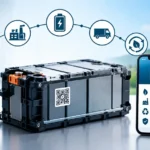
Battery production is the most emission heavy stage in the EV lifecycle.
Key contributors include
• Mining of lithium, cobalt, and nickel
• Chemical processing and refining
• Energy intensive cell manufacturing
This process consumes significant energy, often sourced from fossil fuel based grids. The result is a high upfront carbon footprint before the vehicle is even driven.
2. Vehicle Manufacturing
EV manufacturing includes the production of steel, aluminum, and electronic systems.
Smelting metals and producing lightweight materials require large amounts of energy. Assembly plants, logistics, and global supply chains add to emissions.
Managing supply chain emissions becomes critical, especially in defining how to reduce scope 3 emissions in automotive systems.
3. Electricity for Charging
Charging is where EV emissions vary the most.
- Coal-heavy grids increase emissions
- Renewable energy reduces emissions significantly
- Energy mix directly impacts EV lifecycle emissions
A vehicle charged in a coal-dependent grid will have a higher footprint than one charged in a renewable powered system. This makes electricity source one of the most important variables in electric vehicles emissions comparison.
4. End of Life and Recycling
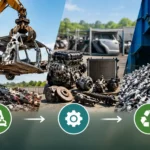
End of life processing includes battery dismantling and material recovery.
- Recycling reduces the need for new mining
- Material recovery improves resource efficiency
- Poor disposal increases environmental impact
A strong circular economy in the automotive industry reduces lifecycle emissions by reintroducing materials into production cycles.
Factors That Influence EV Carbon Footprint
Several variables influence the emissions perspective and their overall impact.
Key drivers of variation
1. Electricity grid mix
Cleaner grids reduce emissions over time. As grids transition toward renewables, EVs already on the road become cleaner without any modification.
2. Vehicle lifespan and usage
Higher driving distance spreads the initial carbon debt over more kilometers. This improves overall efficiency.
3. Battery size and chemistry
Larger batteries increase production emissions. Chemistries such as LFP generally have lower footprints compared to nickel based alternatives.
4. Break-even point
An EV typically becomes cleaner than a gasoline vehicle after a certain distance, often between 15000 to 30000 kilometers depending on the grid.
5. Charging infrastructure efficiency
Energy losses during charging and transmission also impact total emissions.
6. Recycling systems
Efficient recycling reduces dependence on new raw materials and lowers lifecycle emissions over time.
Why Do EVs Still Reduce Transportation Emissions?
Despite their limitations, EVs remain one of the most effective tools for reducing transport related emissions. The advantage lies in how they use energy and how their emissions evolve over time.
Where EVs outperform conventional vehicles
1. Higher efficiency
Electric motors convert about 85 to 90 percent of energy into motion. Internal combustion engines lose a large portion of energy as heat.
2. Zero tailpipe emissions
No direct emissions during driving improves urban air quality by reducing particulate matter and nitrogen oxides.
3. Grid improvement advantage
As electricity systems shift toward renewables, EV emissions decrease automatically. Conventional vehicles do not benefit from this shift.
4. Lower lifetime emissions
When evaluated across EV lifecycle emissions, most EVs outperform gasoline vehicles even when powered by mixed energy grids.
5. Policy alignment
EV adoption supports national decarbonization strategies and regulatory targets.
Removing older vehicles accelerates this transition. The benefits of vehicle scrapping in India include reduced emissions intensity and faster fleet modernization.
The Role of Policy and Carbon Systems
Electric vehicle adoption does not operate in isolation. Policy frameworks and carbon markets play a supporting role in reducing lifecycle emissions.
Manufacturers increasingly rely on carbon accounting systems to track emissions across production and supply chains. Market based tools such as carbon credits are used to offset unavoidable emissions.
Extended Producer Responsibility frameworks also influence EV sustainability. Regulations around battery recovery and recycling ensure accountability across the product lifecycle.
Scrapping infrastructure such as registered vehicle scrapping facilities improves material recovery and reduces dependence on energy intensive raw material extraction.
Conclusion
Electric vehicles are not fully carbon neutral today. Emissions are generated during battery production, manufacturing, electricity generation, and end of life processing. What sets EVs apart is not the absence of emissions but the ability to reduce them over time. Their performance improves as grids become cleaner, recycling systems strengthen, and manufacturing processes become more efficient.
EVs represent a transition technology rather than a final solution. They offer a clear pathway toward lower emissions in the transport sector while broader systems such as energy and industrial production continue to evolve.
FAQs
1. Are electric vehicles truly carbon neutral?
No, EVs are not fully carbon neutral today. Emissions occur during manufacturing, battery production, and electricity generation.
2. Why do EVs have higher manufacturing emissions?
Battery production and material processing require energy intensive processes, which increase initial emissions.
3. How does battery production affect EV carbon footprint?
Mining and chemical processing of battery materials generate significant emissions, contributing to upfront carbon debt.
4. Are EVs better for the climate than gasoline cars?
Yes, EVs generally have lower lifetime emissions compared to gasoline vehicles, especially when powered by cleaner electricity.
5. Does the electricity source affect EV emissions?
Yes, coal-based electricity increases emissions, while renewable energy reduces the overall footprint.
6. What are lifecycle emissions of electric vehicles?
They include emissions from production, usage, and disposal stages of the vehicle.
7. How can EV emissions be reduced in the future?
Cleaner grids, better battery technology, efficient recycling, and improved manufacturing processes will reduce EV emissions over time.