
Extended Producer Responsibility (EPR) regulations require businesses to take responsibility for the environmental impact of the products they introduce into the market. In India, these rules apply not only to manufacturers but also to Producers, Importers, and Brand Owners (PIBOs) that place regulated products such as plastic packaging, electronics, batteries, and tyres into circulation. Regulatory authorities like the Central Pollution Control Board (CPCB) assign recycling obligations that companies must meet every year.
Within this compliance framework, two terms often appear together: EPR targets and EPR credits. While closely related, they represent different elements of the regulatory system. Targets define the recycling obligation assigned to companies, while credits serve as proof that recycling activity has actually taken place.
What Are EPR Targets?
EPR targets represent the mandatory recycling obligations assigned to companies under waste management regulations. These obligations are determined by environmental authorities and are based on the quantity of regulated products introduced into the market.
In India, CPCB EPR targets are calculated using data such as product sales, import volumes, or the average life cycle of a product category. For example, if a company sells plastic packaging or electronic devices in a given year, a certain percentage of that material must eventually be collected and recycled.
From an industrial perspective, these targets function as a legal liability. Companies must account for them in their operational planning, similar to regulatory taxes or compliance costs.
Typical features of EPR targets include:
- Assigned by regulators: Targets are defined by authorities such as the CPCB under various waste management rules.
- Linked to market activity: The more products a company places in the market, the higher its recycling obligation.
- Waste stream specific: Targets vary across plastic waste, e-waste, battery waste, and tyre waste regulations.
- Annual compliance requirement: Companies must meet their recycling targets each year to remain compliant.
For example, a company selling electronic devices may be required to ensure that a specific percentage of the e-waste generated from those products is collected and recycled annually.
What Are EPR Credits?
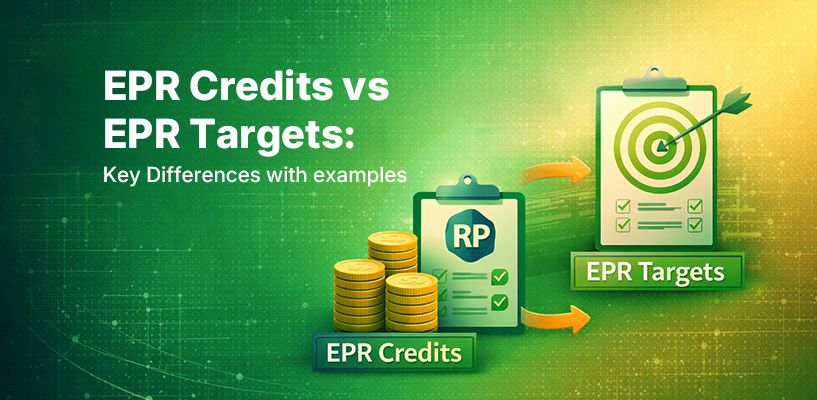
While EPR targets define the recycling obligation, extended producer responsibility credits represent proof that recycling has actually occurred.
EPR credits are generated when CPCB-registered recyclers collect and process regulated waste through authorized facilities. The recycler receives credits corresponding to the quantity of material recycled. These credits can then be transferred to companies responsible for that waste.
The EPR credit meaning is therefore simple: a certificate confirming that a specific amount of waste has been recycled within the regulatory system.
Key characteristics of EPR credits include:
- Generated by authorized recyclers: Only recyclers registered with regulatory authorities can create credits.
- Verified through digital systems: Credits are recorded within CPCB’s centralized compliance portal.
- Tradable compliance units: Producers can purchase credits to fulfil their recycling obligations.
- Linked to waste processed: Credits represent actual recycling activity, not estimated figures.
From an industrial perspective, EPR credits function like a tradable commodity. Their price may fluctuate depending on market demand and recycling capacity. When regulatory deadlines approach, demand for credits often increases.
Key Differences Between EPR Credits and EPR Targets
Many companies entering EPR compliance assume that targets and credits mean the same thing. They don’t. ‘Target’ represents the obligation imposed by regulators, while the ‘credits’ represent proof that the obligation has been fulfilled. Confusing the two often leads to compliance gaps, budgeting mistakes, or last-minute credit purchases before regulatory deadlines.
| Aspect | EPR Targets | EPR Credits |
| Meaning | Mandatory recycling obligation | Certificate proving waste recycling |
| Assigned by | Regulatory authorities such as CPCB | Generated by authorized recyclers |
| Purpose | Defines the compliance requirement | Demonstrates compliance |
| Based on | Quantity of products introduced in the market | Quantity of waste recycled |
| Role | Sets the recycling goal | Helps companies achieve the goal |
| Legal standing | Regulatory obligation under environmental law | Proof of compliance activity |
| Carry forward | Targets must be met annually | Surplus credits may sometimes be carried forward |
How EPR Credits Help Meet EPR Targets
For many businesses, especially small and medium enterprises, setting up their own recycling infrastructure is not practical. This is where the credit system becomes important.
Instead of building recycling facilities, companies can rely on recyclers who specialize in waste processing. The typical compliance process works as follows:
- Producers introduce products into the market and generate waste liability.
- Regulators assign CPCB EPR targets based on product volume.
- Authorized recyclers collect and process waste through approved facilities.
- Recyclers generate extended producer responsibility credits based on recycling activity.
- Producers purchase these credits through the CPCB centralized portal.
- The credits are applied toward EPR target compliance.
In the Indian ecosystem, Producer Responsibility Organizations (PROs) often act as intermediaries. They help companies manage collection logistics, identify recyclers, and acquire credits required for compliance.
This system provides flexibility while ensuring that the actual recycling work is carried out by specialized facilities
Conclusion
EPR targets and EPR credits form two essential components of modern waste management regulations. Targets define the mandatory recycling responsibilities assigned to producers, importers, and brand owners; while credits provide a practical mechanism for demonstrating compliance with those obligations.
Together, they create a structured system that encourages recycling investments, strengthens waste management infrastructure, and ensures accountability in product lifecycle management.
For businesses operating in regulated sectors, EPR should not be seen only as a compliance requirement. When integrated into broader sustainability initiatives such as circular economy practices and ELV carbon credits, it can also improve ESG performance and strengthen environmental responsibility across supply chains.
FAQs
Q1. What is the difference between EPR credits and EPR targets?
EPR targets define the recycling obligation assigned to producers, while EPR credits are certificates proving that recycling has taken place.
Q2. Can companies buy EPR credits to meet targets?
Yes. Companies can purchase credits generated by authorized recyclers to fulfil their regulatory recycling obligations.
Q3. Are EPR targets mandatory for all producers?
Yes. Producers, importers, and brand owners introducing regulated products into the market must meet EPR targets.
Q4. How are EPR targets calculated?
Targets are usually calculated based on product sales, imports, or historical waste generation data.
Q5. Do EPR credits expire?
In some cases, unused credits may have a limited validity period depending on regulatory guidelines.
Q6. What happens if EPR targets are not met?
Regulators may impose Environmental Compensation penalties, and companies must still meet the targets later.
Q7. Are EPR credits applicable to plastic, e-waste, and battery waste?
Yes. Credit systems exist for multiple regulated waste streams including plastic, electronic, battery, and tyre waste.
Q8. How do EPR credits support circular economy?
They encourage recycling and ensure that recovered materials are returned to manufacturing supply chains instead of being discarded.