
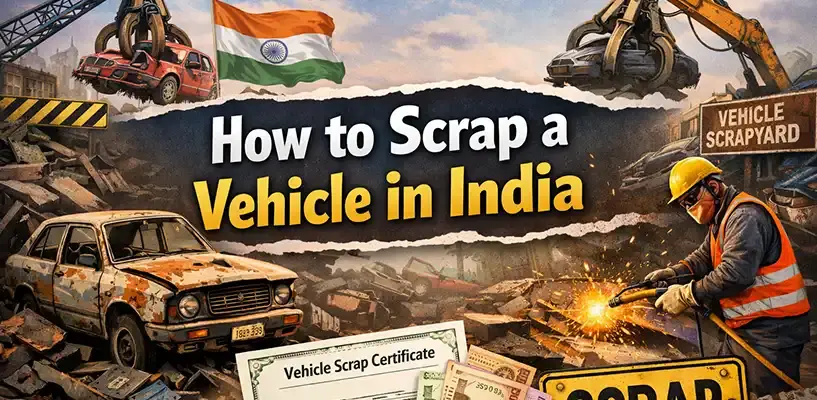
Vehicle scrapping in India plays a crucial role in reducing pollution, improving road safety, and ensuring legal compliance. Ageing vehicles or those that fail fitness tests must be scrapped through a government-authorised Registered Vehicle Scrapping Facility (RVSF). The facility verifies documents, dismantles the vehicle scientifically, manages RTO deregistration, and issues a digital scrapping certificate required to claim government incentives and complete legal ownership closure.
What Is Vehicle Scrapping?
Vehicle scrapping is the regulated process of dismantling vehicles that are no longer roadworthy or legally allowed to operate. Such vehicles may be declared unfit after mandatory testing or voluntarily surrendered by owners when maintenance and compliance become impractical.
The process involves removing hazardous fluids, separating reusable materials, and recycling metal in a controlled manner. Older vehicles tend to emit significantly higher pollutants and demand frequent repairs. Scrapping such vehicles supports cleaner mobility and helps reduce automotive carbon emissions.
Scrapping must be carried out only at authorised facilities because they follow environmental and safety standards. Informal dismantling often leads to pollution, unsafe handling, and misuse of vehicle parts. Formal scrapping ensures traceability and responsible handling of end of life vehicles in india.
Government Rules for Vehicle Scrapping in India
Vehicle scrapping in India is regulated under the Voluntary Vehicle Fleet Modernization Program, which links continued vehicle operation to fitness and registration compliance. The vehicle scrappage policy in India mandates structured assessment and controlled exit of old vehicles.
Key regulatory provisions include:
- Mandatory Fitness Testing: Commercial vehicles are tested after 15 years and private vehicles after 20 years at Automated Testing Stations.
- Scrapping Thresholds: Vehicles that fail fitness tests or do not renew registration are classified as unfit and cannot remain operational.
- Conditional Mandatory Scrapping: Scrapping is voluntary unless a vehicle fails fitness requirements, after which disposal becomes mandatory.
- Authorised Scrapping and Deregistration: Unfit vehicles must be scrapped only at government authorised Registered Vehicle Scrapping Facilities. Scrapping triggers cancellation of registration records, ensuring the vehicle is permanently removed from the transport system.
This framework ensures uniform enforcement and accountability across states.
Step-by-Step Process to Scrap a Vehicle in India
Understanding the vehicle scrapping process in India helps vehicle owners complete the procedure smoothly and avoid legal or financial issues.
1. Find an Authorised Registered Vehicle Scrapping Facility
The first step is locating a government approved scrapping facility. These facilities are listed on official transport portals. Choosing an authorised facility ensures compliance with car scrapping rules in India and protects owners from future liability.
2. Submit Vehicle and Required Documents
The owner submits the vehicle along with required documents to the facility. Ownership details are verified, and checks are conducted to confirm there are no pending loans or disputes linked to the vehicle.
3. Vehicle Inspection and Scrap Value Assessment
The facility inspects the vehicle to determine scrap value. Valuation depends on factors such as vehicle weight, metal content, and recoverable components. Owners are informed of the value before dismantling begins.
4. Scientific Dismantling and Deregistration
Once approved, the vehicle is dismantled in a controlled environment. Engine and chassis numbers are removed and uploaded to the VAHAN system. The vehicle is then permanently deregistered with the RTO, ensuring it cannot return to circulation.
5. Issuance of Scrapping Certificate and Payment
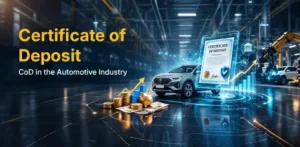
After dismantling, the owner receives a digital Certificate of Scrapping or Certificate of Deposit. Scrap value is transferred directly to the owner’s bank account. This certificate is required to claim incentives on new vehicle purchases.
Documents Required to Scrap a Vehicle
Submitting the correct documents is a key part of the vehicle scrapping process. Authorised scrapping facilities rely on these records to confirm ownership, check loan status, and ensure the vehicle is legally removed from government databases.
- Registration Certificate: The Registration Certificate confirms ownership and vehicle details.
- Owner Identity Proof: Valid identity proof such as Aadhaar card, PAN card, or driving licence is required.
- Bank NOC if Applicable: If the vehicle was financed, a No Objection Certificate from the lender is mandatory.
- Affidavit for Clear Title: An affidavit confirming that the vehicle is free from disputes may be required.
- Cancelled Cheque: A cancelled cheque ensures correct transfer of scrap value to the owner’s bank account.
Benefits of Scrapping a Vehicle Through an Authorised Facility
Scrapping vehicles through authorised facilities offers multiple advantages.
1. Scrap Value
Authorised scrapping facilities assess the vehicle based on weight, metal content, and recoverable materials. This ensures owners receive a fair and transparent scrap value rather than arbitrary pricing.
2. New Vehicle Purchase Incentives
The scrapping certificate can be used to claim manufacturer discounts on new vehicles.
3. Road Tax Rebates
Several states offer road tax concessions when a new vehicle is registered against a scrapping certificate. This benefit lowers the upfront ownership cost and encourages vehicle owners to move towards compliant and safer vehicles.
4. Registration Fee Waiver
Registration fees are completely waived under applicable schemes.
5. Legal Liability Closure
Once deregistered, the owner is no longer responsible for misuse or legal issues involving the old vehicle. Formal scrapping also supports a responsible circular economy in automotive industry by recovering materials through organised channels.
Conclusion
Scrapping an old vehicle through an authorised facility is the correct way to close ownership legally. It ensures deregistration is completed, future liability is removed, and the process remains compliant with current rules. Following the framework under the vehicle scrappage policy in India also enables owners to access incentives and tax benefits linked to formal scrapping.
Once a vehicle is scrapped and a Certificate of Deposit is issued, proper handling of that certificate becomes part of the same compliance chain. Digital platforms like DigiELV by MMCM help manage this step by enabling lawful transfer of certificates while keeping them linked to verified scrappage records. Using authorised facilities along with compliant digital systems helps prevent misuse and maintains accountability throughout the vehicle end-of-life process.
FAQs
Approach a government authorised RVSF, submit documents, complete scrapping, and receive a digital scrapping certificate.
Scrapping becomes mandatory only if the vehicle fails fitness tests or registration renewal is denied.
Registration Certificate, owner identity proof, bank NOC if financed, affidavit, and cancelled cheque are required.
Scrap value depends on vehicle weight, material content, condition, and is paid directly to the owner of the scrap vehicle.
It confirms dismantling and deregistration, and is used to claim incentives on new vehicle purchases.
Yes, but only after obtaining a No Objection Certificate from the bank or financier concerned.
The authorised scrapping facility updates transport records and ensures the vehicle is permanently deregistered officially.
Yes, eligible owners receive road tax concessions, registration fee waivers, and special OEM discounts on ex-showroom prices on new vehicles.
The vehicle may not be deregistered, exposing the owner to future legal and compliance risks.
Last Updated on: April 15, 2026