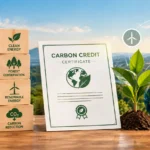

High-quality carbon credits represent verified reductions or removals of greenhouse gas (GHG) emissions that meet established environmental integrity standards. These credits originate from climate mitigation projects that either prevent emissions or actively remove carbon dioxide from the atmosphere. To qualify as high quality, a carbon credit must prove that its impact is real, measurable, additional, and appropriately addressed for permanence and other relevant risks .
With growing participation in voluntary carbon markets, the need for credible and reliable credits has become more critical than ever. Organizations investing in carbon credits need to assess their quality carefully to avoid weak or misleading climate claims. High-quality credits provide greater confidence that the claimed climate impact is legitimate and contributes to genuine emission reductions or removal efforts.
What Are High-Quality Carbon Credits?
High-quality carbon credits are standardized units that represent quantified and verified emission reductions or removals, supported by documented evidence, independent third-party auditing, and transparent registry tracking. The distinction between a high-quality credit and a low-integrity one lies not simply in the project category but in how rigorously the emission reductions or removals are quantified, monitored, assessed, and governed throughout the project lifecycle.
In carbon markets, not all credits are equal. A credit issued from a project with weak baseline methodology, limited monitoring, or inadequate independent assessment carry significant integrity risks. High-integrity carbon credits, by contrast, are generated through carbon-crediting programmes that have requirements covering areas such as project design, quantification, validation and verification, tracking, and safeguards .
For companies building toward net zero targets, the quality of carbon credits purchased can influence the credibility of their climate strategies and related claims .
Key Characteristics of High-Quality Carbon Credits
High-quality carbon credits are defined by a set of non-negotiable quality criteria. Each criterion addresses a specific integrity risk within the carbon credit lifecycle.
Additionality
Additionality is the key criterion of carbon credit quality. A project is considered additional when the emission reductions or removals it generates would not have occurred in the absence of the incentive created by carbon credit revenue. This matters because issuing credits for reductions or removals that would have occurred anyway may not represent an additional climate benefit . Carbon finance must be a decisive enabling factor for the project, not a supplementary income stream for an activity already underway.
Permanence
Carbon reductions and removals must be addressed for long-term climate value. Permanence is particularly critical for nature based projects such as forestry and soil carbon, where there may be risks of reversal through events such as fire, disease, or land use change.Carbon crediting programmes may address these risks through measures such as buffer reserves, monitoring requirements, and mechanisms to compensate for reversals .
Robust Measurement and Verification
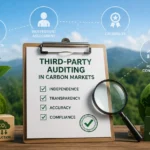
Emission reductions and removals should be robustly calculated using approved scientific methodologies and independently assessed through third party validation and verification process. This helps distinguish a documented climate outcome from an estimate. Understanding how carbon credits work within this measurement and verification framework is essential for organizations that rely on credits for compliance or sustainability reporting purposes.
No Double Counting
Each carbon credit must represent a unique emission reduction or removal, and should be tracked through an appropriate registry system . Double counting can occur through double issuance, double claiming, or double use. . Registry systems and other accounting controls help identify, track, and prevent these risks .
Environmental and Social Safeguards
High-integrity carbon projects should address potential risks to ecosystems or communities. Carbon crediting programmes may require projects to follow environmental and social safeguards and demonstrate appropriate sustainable development benefits. Depending on the project, these may include biodiversity protection, water systems, or community livelihoods, employment, or other local benefits.
How High-Quality Carbon Credits Are Verified
Verification is one part of the process through which a project’s reported emission reductions or removals are independently assessed. It does not, by itself, determine whether a credit is “high quality.” High-integrity carbon markets rely on multiple elements, including robust methodologies, additionality, monitoring, independent validation and verification, registry tracking, and safeguards .
Here is how the verification chain operates for high-quality carbon credits:
-
- Project Development: Projects are designed using an approved methodology from a recognized carbon-crediting programme such as Verified Carbon Standard (VCS), Gold Standard (GS), Cercarbono, or any other else.
- Listing: Project documents are submitted to the applicable programme and made available for review, where required.
-
- Validation: Project design documents are assessed by an accredited validation and verification body (VVB) to determine whether the proposed project meets the applicable requirements .
- Project Registration: Once the applicable requirements are satisfied, the project is registered under the carbon programme.
- Project Implementation and Monitoring: The project is implemented and relevant activity data and emission reductions or removals are monitored and documented according to the approved methodology.
- Verification: An independent third party auditor assesses the project implementation, monitoring data, calculation methodologies, and reported emission reductions or removals for a defined monitoring period .
- Issuance: Verified emission reductions or removals are submitted to the registry, which issues credits with unique serial numbers and records all issuance, transfer, and retirement events on a publicly accessible platform.
- Retirement: When a credit is used for a permitted claim or other purpose, it is retired in the registry and can no longer be transferred or used again.
Sector specific credits such as ELV carbon credits generated through the material recovery from scrapping of end of life vehicles at government authorized facilities apply the same principles of defined methodologies, monitoring, independent third-party assessment etc. In the ELV carbon credit process, these requirements are further supported by more than 41 digital measurement, reporting, and verification (dMRV) data points recorded on a blockchain-enabled platform providing a detailed, auditable record of project activities and strengthening traceability throughout the credit lifecycle.
Key Quality and Verification Elements
| Verification Element | Purpose |
| Methodology | Defines how emission reductions or removals are calculated and measured. |
| Monitoring | Tracks project implementation and documents actual emission reductions or removals. |
| Third Party Verification | Independent auditing confirms accuracy and credibility of project data. |
| Registry Tracking | Records the lifecycle of credits, including issuance, transfers and retirement, prevents double counting and ensures full lifecycle transparency. |
Why High-Quality Carbon Credits Matter
The quality of carbon credits has direct implications for organizations, investors, and the credibility of climate commitments as a whole.
- Low-quality credits can expose organizations to reputational and climate-claim risks , particularly as expectations around corporate climate disclosures and claims continue to develop.
- High-integrity carbon credits are supported by documentation and independent assessment that can provide greater confidence in the underlying emission reductions or removals .
- They help ensure that investment in climate mitigation is directed toward activities with credible environmental outcomes rather than overstated or poorly supported emission reductions .
- They build confidence among customers, investors, regulators, and supply chain partners that an organization’s climate claims are supported by appropriate evidence .
- They encourage the mobilization of investment toward additional mitigation activities , across sectors and geographies.
How Companies Can Identify High-Quality Carbon Credits
Identifying high-integrity carbon credits requires a structured evaluation process, not just a review of the credit price or project category.
Check the Standard and Methodology
Verify that the project is registered under a recognized carbon-crediting programme and follows an approved methodology for the relevant project type. The methodology determines how emission reductions or removals are calculated and what monitoring data is required. Projects operating outside established carbon-crediting frameworks might carry significant integrity risks depending on the claims and evidence provided.
Review Independent Verification Records
High-quality carbon projects should have accessible documentation relating to validation, monitoring and verification where required by the applicable programme. Such documents provide evidence that the project has undergone the required independent assessment and that the reported emission reductions or removals have been quantified in accordance with the applicable methodology . The types of carbon credits that can demonstrate these characteristics include credits from renewable energy, methane capture, afforestation, and technology driven carbon removal projects that are developed and assessed under recognized global standards.
Assess Additionality, Permanence, and Co-Benefits
Evaluate whether the project demonstrates genuine additionality and whether permanence risks have been adequately addressed through appropriate monitoring, buffer reserves or other measures . Review the project documentation for information on environmental and social safeguards and any claimed co-benefits.
Conclusion
High-quality carbon credits play a crucial role in ensuring that carbon markets deliver credible climate benefits. By meeting stringent criteria such as additionality, permanence, robust quantification, independent assessment safeguards and transparency, these credits provide greater confidence that they represent genuine emission reductions or removals.. As businesses increasingly rely on carbon credits to support climate strategies and net zero commitments, prioritizing high-integrity carbon credits is essential for supporting credible climate action, managing climate-claim risks, and directing finance toward meaningful mitigation activities .
FAQs
What criteria define high-quality carbon credits?
High-quality carbon credits must satisfy key criteria: additionality, permanence, robust quantification, independent validation and verification, prevention of double counting, and compliance with environmental and social safeguards. These criteria are reflected in established carbon-crediting programmes and frameworks .
Why is additionality important in carbon credits?
Additionality helps ensure that carbon credits represent emission reductions or removals that would not have occurred without the incentive created by carbon credit revenues. Without this criterion, credits could potentially be issued for activities that would have occurred anyway, reducing the climate benefit represented by the credit. .
How is carbon credit quality verified?
Carbon credit quality involves several processes, including methodology selection, project validation, monitoring, and third-party verification. Validation assesses the project design, while verification assesses the reported emission reductions or removals for a defined period. Registry systems then track the resulting credits through issuance, transfer, and retirement .
What is double counting in carbon credits?
Double counting occurs when the same emission reduction or removal is counted more than once . It can involve double issuance, double claiming, or double use. Carbon-crediting programmes use methodologies, accounting controls, and registry systems to identify and manage these risks .
What types of projects generate high-quality carbon credits?
High-quality carbon credits can come from a range of project types, including renewable energy, forestry and land use, methane capture, energy efficiency improvements, and carbon removal technologies such as Direct Air Capture and Biogenic Carbon Capture and Storage (DACCS & BECCS). However, project type alone does not determine credit quality; the specific project’s methodology, additionality, quantification, monitoring, verification, and other integrity characteristics must be assessed. .
Why are high-quality carbon credits important for climate goals?
High-integrity carbon credits can help ensure that resources invested in climate action support credible and measurable emission reductions or removals. They can also help reduce the risk of unsupported climate claims and direct capital toward projects that meet stronger environmental and social integrity criteria.