

Reducing automotive carbon emissions begins with how vehicles are driven and maintained on a daily basis, and extends to the technologies used in vehicles, the way they are manufactured, moved through supply chains, and finally recycled. Driving patterns, vehicle choice, factory energy use, logistics movement, and end of life handling all contribute to the total emissions profile. Looking at this full lifecycle helps individuals and organizations focus on practical actions that directly reduce emissions at each stage.
Where Automotive Carbon Emissions Come From?
Automotive emissions originate across the full vehicle lifecycle, not only from fuel use on the road. Emissions arise during vehicle operation, manufacturing, raw material extraction, logistics movement, and end of life disposal. These sources align with Scope 1, Scope 2, and Scope 3 emissions used in emissions accounting frameworks.
1. Vehicle use and fuel combustion
Fuel burned during daily driving creates direct emissions. This is the most visible source and falls under Scope 1 for vehicle operators.
2. Manufacturing energy consumption
Vehicle assembly plants consume electricity and fuel for production processes. These emissions are categorized under Scope 2.
3. Raw material extraction and processing
Steel, aluminum, plastics, and battery materials require energy intensive extraction and processing. These emissions fall under Scope 3.
4. Logistics and vehicle distribution
Transportation of parts, finished vehicles, and materials across locations adds to Scope 3 emissions.
5. End of life disposal and recycling
Improper disposal increases emissions, while regulated recycling reduces lifecycle impact. This stage connects directly with mechanisms such as elv carbon credits.
Reducing Emissions Through Better Driving and Vehicle Use
Driving behavior has a direct effect on how much fuel a vehicle consumes and how much carbon it releases during everyday use. Small adjustments in speed, acceleration, load, and route planning reduce fuel burn immediately without any change in vehicle type.
1. Maintain moderate speeds
Vehicles are generally most fuel efficient between 45 and 65 miles per hour. As speed increases beyond this range, fuel use rises sharply. Every 5 miles per hour above 60 can feel like paying an additional 0.20 to 0.30 per gallon because more engine power goes into overcoming wind resistance rather than moving the vehicle forward.
2. Gentle acceleration and braking
Rapid starts and hard braking waste fuel that could have been used for steady movement. Smooth acceleration helps reach cruising speed efficiently and can improve fuel economy significantly in traffic conditions. Anticipating signals and easing off the accelerator early reduces the need for sudden braking. In electric and hybrid vehicles, regenerative braking helps recover energy, while in fuel vehicles, harsh braking increases brake dust emissions.
3. Reducing idling
An idling vehicle consumes fuel without covering any distance. Modern engines use less fuel restarting than idling for more than ten seconds. Vehicles do not need prolonged idling to warm up. Gentle driving after starting is a more efficient way to reach operating temperature.
4. Tire pressure management
Underinflated tires increase rolling resistance because more tire surface touches the road. This forces the engine to work harder and increases fuel use. Maintaining correct tire pressure improves mileage, enhances handling, and extends tire life.
5. Trip optimization
Combining errands into a single trip reduces the number of times a cold engine is started, which otherwise consumes more fuel. Planning routes using navigation tools helps avoid traffic congestion where idling and stop start movement are common. Carpooling and adjusting travel times also reduce time spent in heavy traffic.
6. Reducing unnecessary load
Extra weight directly affects fuel consumption. Carrying an additional 50 to 100 pounds can lower fuel efficiency by around one percent. Roof racks, carriers, and external mounts increase air drag and can reduce efficiency significantly at highway speeds. Removing them when not in use improves performance.
Managing air conditioning use
At lower speeds, open windows may be more efficient than running air conditioning. At higher speeds, open windows create drag, making air conditioning the better option. Parking in shaded areas reduces cabin heat buildup and lowers the need for heavy cooling when starting the drive. Using the air recirculation setting also reduces load on the cooling system.
7. Practical driving aids
- Use cruise control on flat highways to maintain steady speed
- Practice predictive driving by observing traffic ahead and easing off early
- Use manufacturer recommended engine oil to reduce internal friction
- Activate eco mode if available to optimize throttle response and gear shift
Switching to Low-Emission Vehicles and Alternative Transport
A large share of mobility related carbon output depends on the vehicle chosen and how frequently private vehicles are used instead of shared or public options. Transitioning to low emission vehicles and reducing personal vehicle dependence changes the baseline emissions before any driving behavior comes into play.
1. Electric and zero emission vehicles
Battery electric and hydrogen fuel cell vehicles remove or significantly reduce tailpipe emissions compared to petrol and diesel vehicles. As electricity generation becomes cleaner, the lifecycle emissions linked to these vehicles continue to decline. This is why fleet electrification is a measurable factor in carbon credits for global automobile industry calculations, where replacing fuel based vehicles directly lowers reported emissions.
2. Modal shift from private cars
Using buses, metro systems, carpooling, cycling, and walking reduces emissions per passenger. Shifting regular travel from private cars to public transport can reduce individual carbon output by up to two tons annually by cutting fuel use and reducing congestion.
3. Policy support and infrastructure expansion
Vehicle scrappage programs, tighter emission norms, and expansion of charging infrastructure encourage faster adoption of electric vehicles, especially two wheelers, three wheelers, and public transport fleets in cities.
4. Urban mobility planning
Cities designed for walkability, cycling paths, and electric bus networks reduce the need for short distance fuel based travel, lowering overall transport energy consumption.
5. Benefits and transition challenges
Benefits include:
- Reduced air and noise pollution in urban areas
- Improved energy efficiency across transport networks
- Lower greenhouse gas emissions from daily mobility
Challenges include:
- Higher upfront vehicle costs
- Charging availability
- Range concerns
- Supply chain changes needed for electrification.
The transition also creates opportunities in battery production, charging services, and electric mobility maintenance.
Reducing Emissions in Automotive Manufacturing and Operations
Understanding how to reduce automotive carbon emissions requires attention to what happens inside manufacturing plants where energy use, equipment operation, and material consumption create a large share of emissions. These activities influence Scope 1, Scope 2, and Scope 3 emissions within facilities and form a core part of practical automotive emissions reduction strategies.
1. Renewable electricity sourcing
Shifting from conventional grid electricity to renewable power reduces emissions linked to plant operations and directly lowers Scope 2 exposure.
2. Equipment efficiency upgrades
Upgrading machinery, improving process flow, and reducing fuel based equipment use lowers direct operational emissions under Scope 1.
3. Circular material usage
Using recycled steel, aluminum, and plastics reduces emissions from raw material extraction and processing, which is a key factor in reducing vehicle lifecycle emissions.
4. Waste heat recovery and process optimization
Capturing waste heat and improving production efficiency reduces overall energy demand across manufacturing lines.
| Area | Strategy | Emissions Impact |
| Energy | Renewable sourcing | Scope 2 |
| Equipment | Efficiency upgrades | Scope 1 |
| Materials | Recycled inputs | Scope 3 |
| Processes | Automation optimization | Scope 1 |
Lowering Supply Chain and Logistics Emissions (Scope 3)
A large portion of emissions sits outside factory boundaries in supplier operations and logistics networks. Addressing scope 3 emissions automotive requires coordination across transport routes, packaging practices, and supplier energy use.
1. Supplier engagement
Suppliers contribute emissions through their own energy use, material processing, and manufacturing practices. Working with suppliers to improve their production methods directly lowers the embedded emissions in vehicle components.
- Encourage suppliers to shift toward renewable electricity for production
- Monitor the type of raw materials used and favor recycled inputs
- Include emissions reporting as part of supplier evaluation and procurement decisions
2. Route optimization
Movement of parts and finished vehicles across locations adds substantial emissions due to fuel consumption and idle time in traffic or waiting areas.
- Plan transport routes that reduce total travel distance
- Schedule deliveries to avoid congestion and waiting time
- Consolidate shipments to reduce the number of trips required
3. Modal shift in transport
Different transport modes have very different emissions profiles. Heavy dependence on road and air freight increases fuel consumption compared to alternatives.
- Use rail networks for long distance inland transport where feasible
- Prefer sea freight over air for international movement of parts and vehicles
4. Packaging reduction
Packaging materials add weight and volume to shipments, increasing fuel consumption during transport.
- Use lightweight and reusable packaging solutions
- Design packaging that optimizes space utilization in transport vehicles
Data transparency
Accurate reduction of logistics emissions depends on knowing where emissions occur.
- Collect fuel use and transport data from logistics partners
- Integrate this data into emissions reporting systems
- Use consistent records to support audit and reporting requirements
Managing End-of-Life Vehicle Emissions Through Recycling
Vehicle disposal affects the total emissions profile when materials are not recovered properly. Responsible dismantling and recovery reduce the vehicle carbon footprint at the final stage of the lifecycle.
1. Role of RVSFs in responsible dismantling
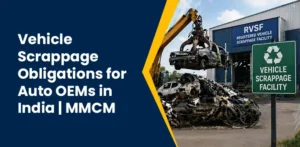
A registered vehicle scrapping facility carries out a structured dismantling process that begins with depollution. Fluids, batteries, airbags, refrigerants, and other hazardous components are removed before the vehicle is dismantled. This prevents soil, air, and water contamination and ensures that the vehicle is taken apart in a controlled environment rather than informal settings.
2. Material recovery and circular economy
After dismantling, metals such as steel and aluminum, along with plastics, glass, and reusable components, are separated and sent for recycling. These recovered materials re enter manufacturing supply chains, reducing the need for energy intensive mining and processing of raw materials.
3. Traceability of recycling outcomes
Documented records maintained during dismantling and material recovery connect each scrapped vehicle to the materials recovered from it. This traceability supports accurate emissions reporting by showing that recycling has occurred through authorized processes rather than informal disposal.
Role of Carbon Credits in Automotive Decarbonization
Improvements in driving patterns, vehicle choice, manufacturing efficiency, and logistics planning reduce a large share of emissions. Even after these efforts, some emissions remain across production, suppliers, and vehicle use. These remaining emissions are addressed through the use of carbon Credits within emissions accounting systems.
1. Addressing residual emissions
Carbon credits are applied after practical reductions are already implemented. They account for emissions that cannot be removed immediately due to operational and supply chain limitations. This allows organizations to report balanced emissions while continuing long term reduction efforts across the vehicle lifecycle.
2. Compliance and voluntary applications
Carbon credits are used in two different environments. In compliance markets, organizations are required to hold credits to match regulated emissions. In voluntary markets, credits are used to account for emissions outside regulatory mandates, especially across supply chains and product use.
This distinction is important when evaluating instruments often discussed as Carbon credits vs carbon offsets, since the governance, verification, and reporting expectations differ between the two.
3. Transition and risk management
Using verified credits that are recorded in recognized registries and retired after use reduces reporting risk. Familiarity with different types of carbon credits supports stronger documentation, audit readiness, and reliable emissions reporting.
How Organizations Can Digitally Track and Optimize Emissions and How MMCM Supports This?
Knowing how to reduce automotive carbon emissions is not limited to driving behavior or factory upgrades. For organizations, the real challenge lies in proving where emissions occur across the vehicle lifecycle and showing how reduction actions are recorded, verified, and reported. Emissions arise from plants, suppliers, logistics movement, and end of life processing, and each stage produces data that must align with Scope 1, Scope 2, and Scope 3 reporting.
1. End to end emissions visibility
Emissions data must connect across manufacturing units, supplier facilities, transport routes, and recycling centers. Without this continuity, emissions reporting becomes fragmented and difficult to defend.
- Link plant energy use with production output
- Connect supplier material data with vehicle components
- Track logistics movement that contributes to Scope 3 exposure
- Record end of life handling and material recovery
2. Supplier data integration
A large part of automotive emissions sits with suppliers. Integrating their energy use, material sourcing, and production records into central systems allows organizations to reflect actual Scope 3 emissions rather than estimates.
3. Audit readiness and ESG reporting
Regulatory reviews and ESG disclosures require documentation that ties emissions claims to operational evidence.
- Time stamped operational records
- Consistent documentation across facilities
- Verifiable data that matches reported emissions
4. Traceability and greenwashing mitigation
Emissions claims are credible only when backed by traceable operational data. Disconnected records create risk of overstatement and reporting errors.
Platforms such as MMCM address this by connecting scrappage operations, material recovery records, certificate generation, and dMRV data capture into one workflow through an end-to-end solution for rvsf. By linking vehicle identity, dismantling activity, inventory tracking, and carbon data points, organizations gain reliable evidence that supports Scope 3 reporting, audit reviews, and emissions reduction documentation across the mobility value chain.
Conclusion
Reducing automotive carbon emissions requires action across multiple layers of the vehicle lifecycle. Driving habits influence fuel use, vehicle technology affects tailpipe output, manufacturing and logistics add operational emissions, and end of life handling determines how materials return to the system. Addressing these together forms practical automotive emissions reduction strategies rather than isolated improvements.
Aligning these actions with Scope 1, Scope 2, and Scope 3 reporting ensures that emissions reductions reflect actual operational changes. Traceable recycling records and the measured use of carbon credits further strengthen this alignment, as explained in how carbon credits work, by connecting emissions reporting with verified lifecycle data.
FAQs:
1. What are the biggest sources of automotive carbon emissions?
Automotive carbon emissions arise from fuel combustion during driving, electricity used in manufacturing plants, energy intensive raw material processing, logistics movement of parts and vehicles, and end of life disposal. These sources span Scope 1, Scope 2, and Scope 3 emissions across the complete vehicle lifecycle rather than a single activity.
2. How can drivers reduce vehicle emissions immediately?
Drivers can reduce emissions by maintaining steady speeds, avoiding rapid acceleration and braking, reducing idling, keeping correct tire pressure, removing excess load, planning routes to avoid congestion, and using air conditioning wisely. These actions reduce fuel consumption and directly lower tailpipe emissions during everyday vehicle use.
3. Do electric vehicles completely eliminate emissions?
Electric vehicles remove tailpipe emissions but still have emissions linked to electricity generation, battery production, raw material extraction, and manufacturing processes. Overall emissions depend on how clean the electricity source is and how materials are produced and recycled at end of life.
4. How does vehicle maintenance reduce emissions?
Proper maintenance improves engine efficiency, ensures optimal fuel combustion, reduces exhaust output, and prevents mechanical issues that increase fuel consumption. Clean air filters, correct oil grade, well maintained tires, and timely servicing all contribute to lowering emissions during regular vehicle operation.
5. What role does manufacturing play in automotive emissions?
Manufacturing contributes through electricity consumption, fuel use in equipment, and processing of raw materials like steel and aluminum. These activities create Scope 1 and Scope 2 emissions within plants and Scope 3 emissions through material sourcing and supplier production.
6. How can logistics emissions be reduced?
Logistics emissions can be lowered through route optimization, shifting freight from road to rail or sea, reducing packaging weight, consolidating shipments, and collecting emissions data from transport partners. These steps reduce fuel use across vehicle and component movement.
7. What is Scope 3 emissions in the automotive industry?
Scope 3 emissions include emissions from supplier manufacturing, raw material extraction, logistics, vehicle use by customers, and end of life processing. These emissions occur outside direct operational control but form the largest share of the automotive emissions profile.
8. How does recycling reduce automotive carbon footprint?
Recycling recovers metals, plastics, and components that would otherwise require fresh extraction and processing. Using recovered materials reduces energy use and emissions associated with mining, refining, and manufacturing new raw materials for vehicles.
9. Can carbon credits offset automotive emissions?
Carbon credits can account for residual emissions that remain after operational and supply chain improvements. When verified and retired properly, credits support emissions reporting by balancing emissions that cannot be eliminated immediately through direct actions.
10. Are emission reduction strategies different by country?
Yes, strategies vary depending on local regulations, fuel standards, energy mix, transport infrastructure, and availability of compliance markets. Countries with cleaner electricity and strong transport networks can reduce emissions more effectively through electrification and modal shifts.