

What Are High-Quality Carbon Credits?
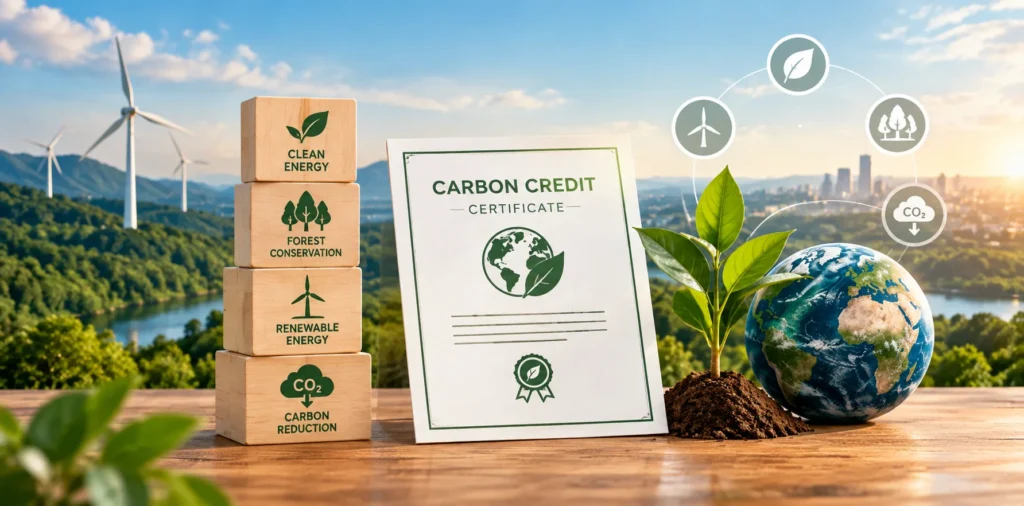
High-quality carbon credits represent verified reductions or removals of greenhouse gas (GHG) emissions that meet established environmental integrity standards. These credits originate from climate mitigation projects that either prevent emissions or actively remove carbon dioxide from the atmosphere. To qualify as high quality, a carbon credit must prove that its impact is real, measurable, additional, […]
What Is Voluntary Carbon Market

A growing number of organizations worldwide are choosing to go beyond legal requirements and take direct responsibility for their carbon footprint. The voluntary carbon market (VCM) is the mechanism that makes this possible. Contrary to how compliance carbon markets operate under government regulations, the voluntary carbon market allows participants to take proactive climate action beyond […]
Compliance vs Voluntary Carbon Market
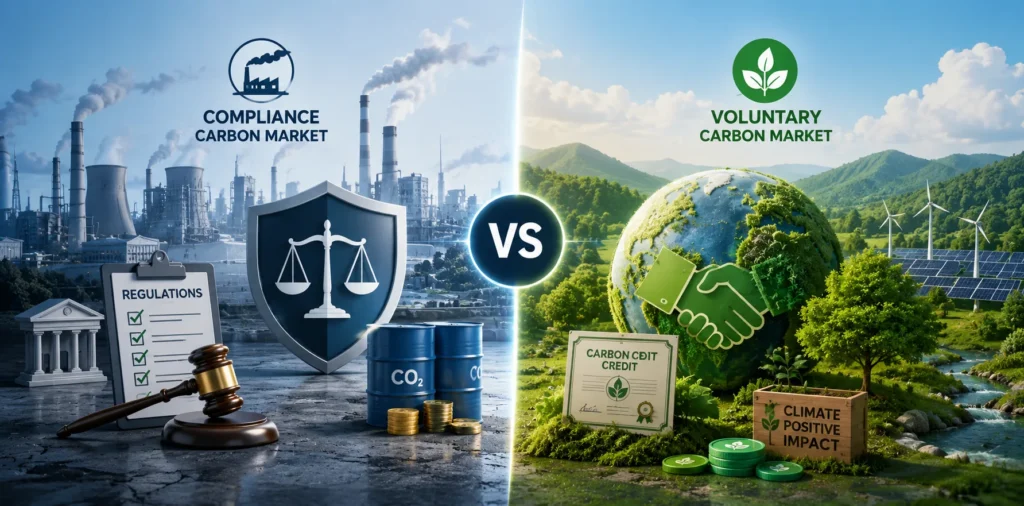
Carbon markets have become an important mechanism for reducing greenhouse gas emissions and supporting global climate action. These markets create systems through which emissions, emission reductions, and removals resulting from various greenhouse gas (GHG) mitigation activities can be assigned an economic value and, depending on the market, traded through defined mechanisms. Verified emission reductions or […]
What Is Third-Party Auditing in Carbon Markets?
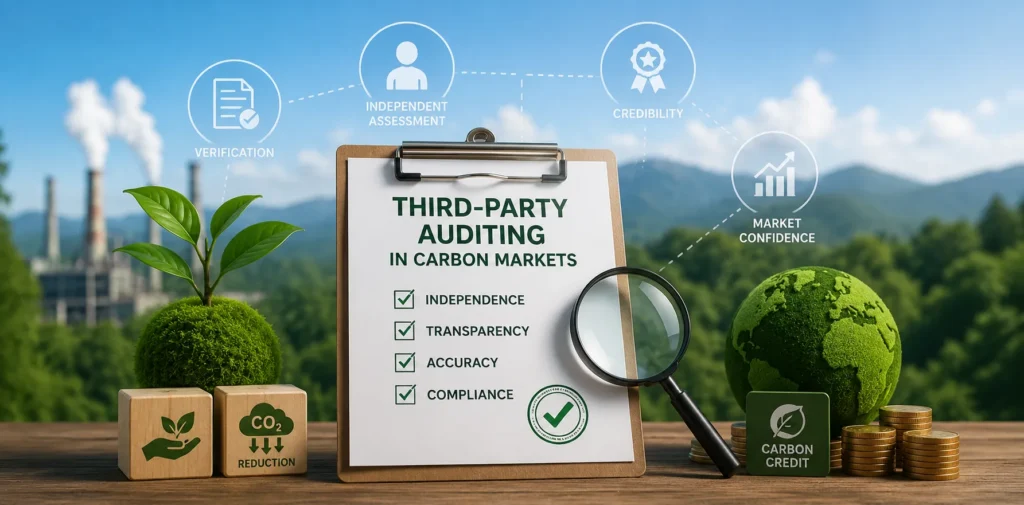
Carbon markets rely on a basic principle: if a project claims to have reduced or removed a certain amount of greenhouse gas emissions, there must be a reliable way to assess whether that claim is credible. This is where third-party auditing comes in. Third-party auditing is the independent assessment of a carbon project by accredited […]
Indian Carbon Market (ICM) and Article 6: Understanding India’s Domestic and Global Carbon Market Framework
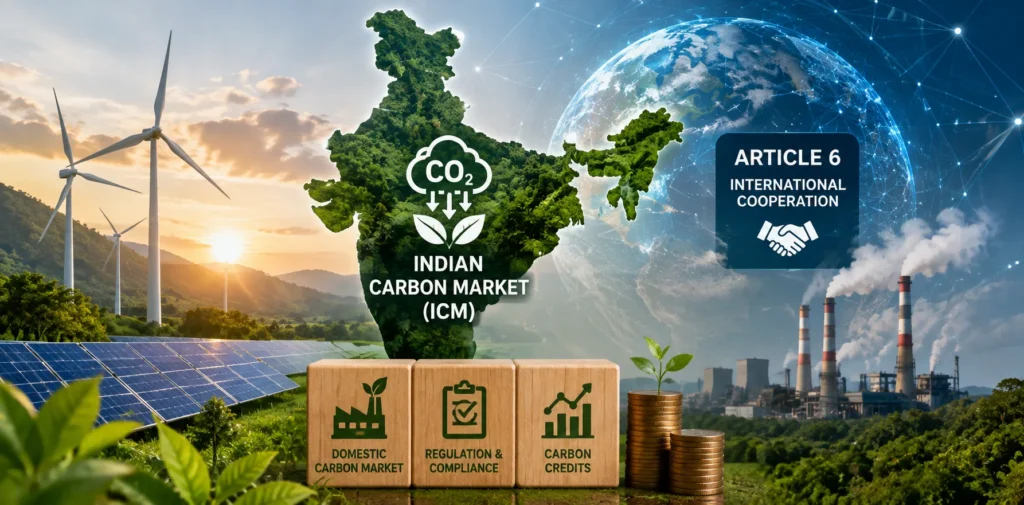
As countries around the world accelerate their climate action, carbon markets are becoming an important tool to reduce greenhouse gas (GHG) emissions while supporting sustainable economic growth. Through the Indian Carbon Market (ICM), the country aims to encourage industries and project developers to reduce emissions and contribute towards India’s climate commitments. At the same time, […]
What Are Carbon Credit Standards?
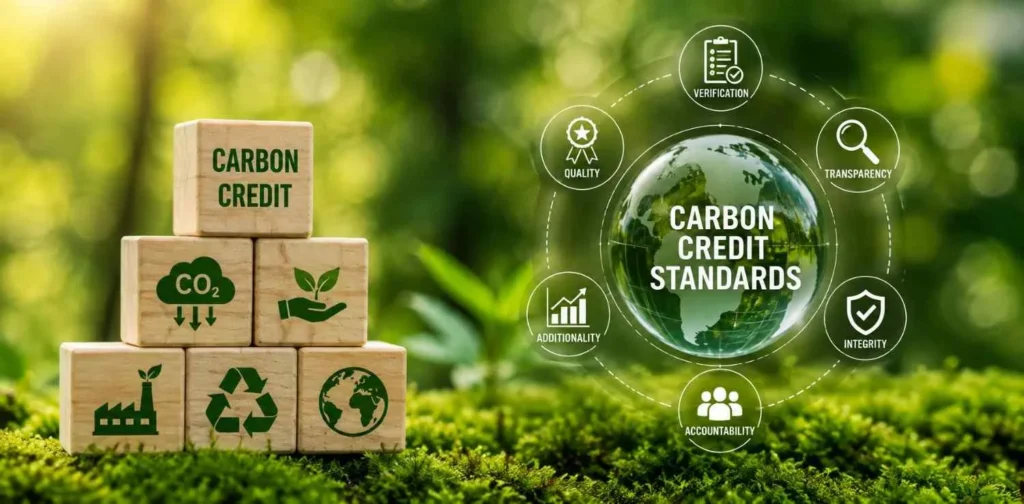
Carbon credit standards are frameworks that ensure carbon reduction,avoidance or removal projects generate credible and measurable climate benefits. These standards define the rules, methodologies, and verification processes used to quantify the greenhouse gas emission reductions or removals. By establishing consistent guidelines, carbon credit standards help ensure that carbon credits represent real, additional, and permanent climate […]
ITMOs and NDCs Under Article 6: How Countries Cooperate to Meet Climate Goals

Climate change is a global challenge, but not every country has the same capacity to reduce greenhouse gas emissions. While some nations can deploy renewable energy or clean technologies quickly, others may face financial, technological, or developmental constraints. Recognizing this, the Paris Agreement introduced a framework that allows countries to cooperate in achieving their climate […]
Carbon Credit Journey: Understanding Issuance, Transfer and Retirement
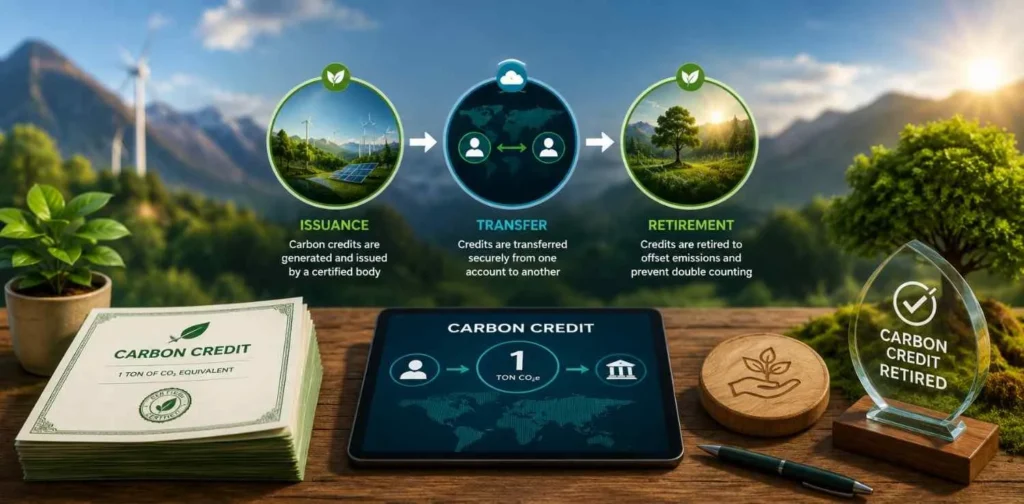
Every carbon credit follows a simple journey before it delivers climate value. It is issued after verified emission reductions are achieved, transferred between buyers and sellers as a tradable asset, and finally retired when someone uses it to make an environmental claim. Understanding these three stages is essential because buying a carbon credit does not […]
Article 6 of the Paris Agreement

Article 6 of the Paris Agreement lets countries cooperate voluntarily to meet their Nationally Determined Contributions (NDCs) through international carbon markets and non-market approaches..It establishes the rules for international climate cooperation, enabling countries to work together on mitigation activities while supporting the achievement of their climate targets. The framework has three parts. Article 6.2 covers […]
Carbon Insetting vs Offsetting

Carbon insetting and offsetting are two complementary approaches that organizations use to address greenhouse gas emissions, but they differ in where the climate action takes place. Carbon insetting focuses on emission reduction or removal within a company’s own value chain, whereas carbon offsetting involves purchasing and retiring verified carbon credits generated by climate projects outside […]