
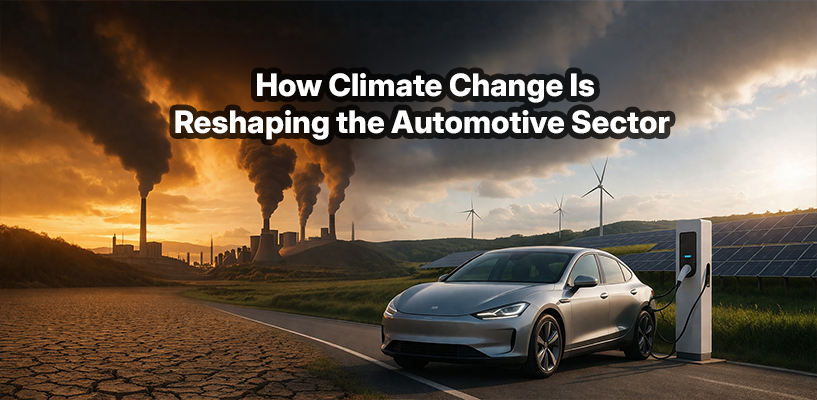
Climate change is a concern that is actively shaping how vehicles are built, powered, and even retired. What used to be a performance-driven industry is now equally driven by emissions, compliance, and long-term sustainability goals.
Transport contributes close to 20 percent of global CO₂ emissions, which puts the automotive sector right at the center of climate action. Governments are tightening rules, investors are backing cleaner technologies, and consumers are becoming more conscious about what they drive.
This shift is not limited to electric vehicles. It also affects manufacturing, supply chains, material sourcing, and end-of-life vehicle management. The focus has moved from just tailpipe emissions to the full lifecycle of a vehicle, from production to disposal and recycling.
Understanding how climate change is reshaping the automotive sector helps explain why the industry is moving toward a low-carbon, circular model.
Why Climate Change Is Transforming the Automotive Industry
The change in the automotive industry isn’t coming from one place. It’s pressure from everywhere at once, and it’s forcing the industry to move faster than it’s used to.
1. Net Zero Pressure Is Real Now
Governments aren’t just talking about climate goals anymore. They’re setting timelines, and industries have to keep up. For automakers, this means cutting emissions across everything they do, not just the cars they sell. You can already see this shift in how companies want to achieve net zero targets by changing how they build and operate.
2. Old Vehicles Are a Bigger Problem Than We Think
A lot of older vehicles are still on the road, and they’re not efficient at all. Many end of life vehicles in india run on outdated tech and burn more fuel than they should. One old car can sometimes pollute as much as several newer ones combined. That’s why removing them has become a priority.
3, Money Is Following Sustainability
Investors are paying attention to how companies handle emissions. It’s not just about sales anymore. Companies are expected to show what they’re doing about sustainability, how they track emissions, and whether they’re actually improving. If they’re not, it affects funding and long-term growth.
4. Buyers Are Thinking Differently
People buying cars are starting to care about more than just mileage and looks. Fuel costs, emissions, and long-term impact are becoming part of the decision.
Key Ways Climate Change Is Reshaping the Automotive Industry
The transformation is happening across multiple layers of the industry. It is not one change, but a series of connected shifts.
1. Massive Shift to Electrification
The move from internal combustion engines to electric vehicles is the most visible change.
Electric mobility reduces tailpipe emissions, but the conversation has moved beyond that. The industry is now focused on total emissions, including battery production and energy sources. This has introduced the concept of embodied carbon, which includes emissions generated during manufacturing.
Battery recycling and reuse are becoming critical because producing new batteries has a high carbon footprint. Solving this is essential for real automotive industry decarbonization.
2. Stricter Global and National Emission Regulations
Regulations are getting tighter across markets, and manufacturers have to keep up. In India, the vehicle scrappage policy in india is designed to remove older, high-emission vehicles from the road. This directly reduces pollution and improves fleet efficiency.
Other frameworks like BS-VI norms and fuel efficiency standards are forcing automakers to redesign engines, improve fuel systems, and invest in cleaner technologies. Automotive industry emission regulations are no longer optional guidelines. They are becoming central to how vehicles are designed and sold.
3. Circular Economy and Sustainable Production
Climate change has made it expensive to rely on raw material extraction alone. The industry is now shifting toward reuse, recycling, and material recovery.
Scrap metal from old vehicles is increasingly used to produce new components. This reduces energy consumption and cuts emissions compared to mining and processing new materials.
The benefits of vehicle scrapping in India go beyond removing old cars. It supports material recovery and reduces the carbon footprint of manufacturing. Automakers are working toward zero-waste plants, reduced water usage, and cleaner energy sources.
4. Supply Chain Transformation
A large part of emissions does not come directly from manufacturing. It comes from suppliers, logistics, and raw material sourcing. These are called Scope 3 emissions. Managing these emissions requires visibility across the entire value chain. Companies are now investing in systems that track emissions at every stage.
Efforts towards reducing scope 3 emissions in automotive are becoming a priority, especially for large manufacturers working with global supplier networks. This is where data, traceability, and reporting systems start playing a major role.
5. Product Innovation and Design
Climate change is also influencing how vehicles are designed. Manufacturers are moving toward modular designs that make vehicles easier to dismantle and recycle. Materials like aluminum, plastics, and rare earth elements are being selected with recovery in mind.
Design for disassembly is becoming a real consideration, not just a concept. Vehicles are being built so that components can be reused or processed efficiently at the end of their lifecycle. This reduces waste and supports long-term sustainability in automotive industry practices.
6. Urban Access Restrictions
Cities are also playing a role in shaping the industry. Low Emission Zones are being introduced in many urban areas. Older, polluting vehicles are restricted or penalized, which pushes owners to upgrade or scrap their vehicles. This creates a direct link between policy and consumer behavior. It also accelerates the removal of inefficient vehicles from the system. Over time, these restrictions will reshape how vehicles are used, especially in densely populated areas.
Conclusion
Climate change is no longer influencing the automotive sector from the outside. It is reshaping how the industry works from within.
Vehicles are being redesigned, factories are changing how they operate, and supply chains are becoming more transparent. The shift toward electric mobility, sustainable production, and circular systems is already underway.
This transition comes with challenges, especially in terms of cost and infrastructure. But it also opens up new opportunities for innovation, efficiency, and long-term growth.
The future of the automotive industry will not be defined only by performance or design. It will be defined by how effectively it reduces emissions and adapts to a low-carbon world.
FAQs
1. How is climate change affecting the automotive industry?
It is pushing manufacturers to reduce emissions, adopt electric mobility, improve production efficiency, and redesign supply chains to be more sustainable.
2. What role do emission regulations play in automotive transformation?
They set limits on emissions and force manufacturers to innovate, adopt cleaner technologies, and comply with stricter environmental standards.
3. How does sustainable manufacturing reduce automotive emissions?
It reduces energy consumption, minimizes waste, and uses recycled materials, which lowers the overall carbon footprint of production.
4. What is the circular economy in the automotive sector?
It focuses on reusing materials from old vehicles, reducing waste, and creating a closed-loop system where resources are continuously reused.
5. How are automotive supply chains becoming more sustainable?
Companies are tracking emissions across suppliers, improving logistics efficiency, and sourcing materials responsibly to reduce overall impact.
6. What innovations are shaping the future of sustainable mobility?
Electric vehicles, battery recycling, modular design, and digital tracking systems are key innovations driving the shift.
7. How will climate change influence the automotive industry in the future?
It will continue to push stricter regulations, accelerate electrification, and increase the focus on lifecycle emissions and sustainable practices.