

What Is an EPR Certificate?
Market access in India’s regulated product categories is not determined solely by manufacturing or import approval. Environmental compliance clearance has become an independent requirement linked to post-sale accountability. Authorities now maintain dedicated registration systems that track obligated entities separately from production licences. An EPR certificate exists within this compliance layer. It formally recognises a company […]
Benefits of Vehicle Scrapping in India
India’s Voluntary Vehicle-Fleet Modernization Programme (V-VMP) was introduced to modernize the country’s aging vehicle fleet and reduce emissions from outdated engines. The program encourages owners to retire unfit vehicles through certified dismantling and recycling systems rather than informal disposal channels. Historically, many end of life vehicles in India moved through unorganized scrap markets where environmental […]
End of Life Vehicles in India: Rules, Process & EPR Explained
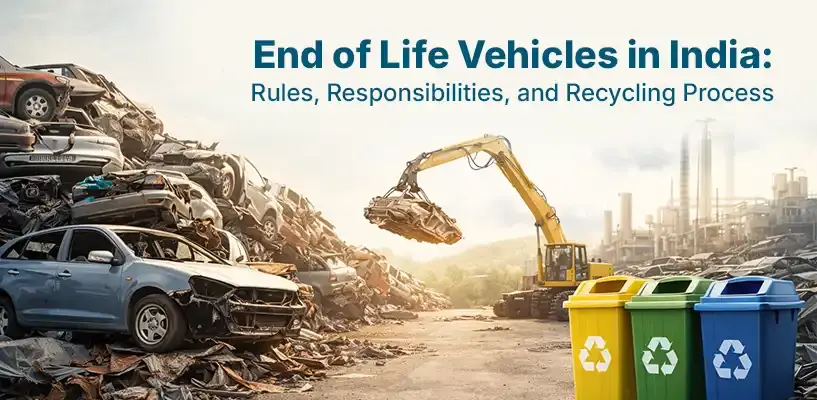
End of life vehicles in India are regulated under the Environment Protection (End-of-Life Vehicles) Rules, 2025, which establish a government-mandated framework for environmentally sound vehicle scrapping through Extended Producer Responsibility. Vehicles that are deregistered, declared unfit, or exceed prescribed age limits must be processed at an authorised Registered Vehicle Scrapping Facilities to enable verified material […]
Sustainability in the Automotive Industr
For years, sustainability in the automotive sector was discussed mostly in terms of fuel efficiency and emission norms. That conversation is changing. The question is no longer limited to how clean a vehicle runs. It now includes what happens after that vehicle is no longer on the road. Old vehicles are dismantled, recycled, or, in […]
How to Scrap a Vehicle in India
Vehicle scrapping in India plays a crucial role in reducing pollution, improving road safety, and ensuring legal compliance. Ageing vehicles or those that fail fitness tests must be scrapped through a government-authorised Registered Vehicle Scrapping Facility (RVSF). The facility verifies documents, dismantles the vehicle scientifically, manages RTO deregistration, and issues a digital scrapping certificate required […]
Certificate of Deposit CoD in the Automotive Industry
India’s vehicle scrappage framework now operates through a regulated and digitally monitored system. Vehicles cannot be dismantled or removed from the transport registry through informal channels without creating compliance risks. Within this framework, the Certificate of Deposit (CoD) functions as the formal starting point of regulated scrappage. It marks the entry of a vehicle into […]
Scope 3 Emissions: Meaning, Categories, Examples, and Why They Matter
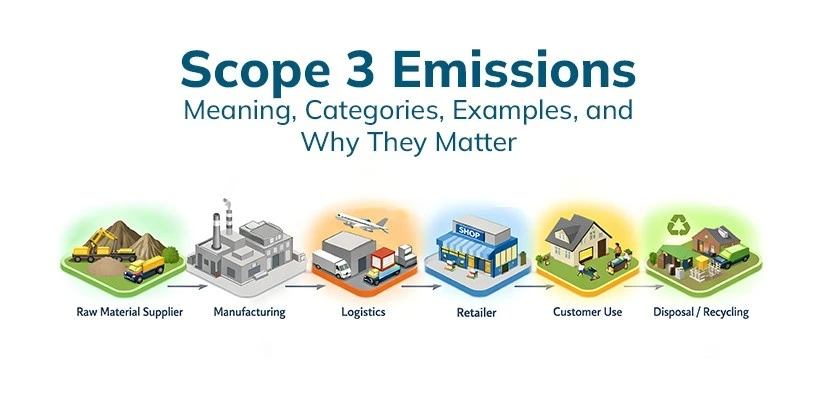
Scope 3 emissions are the indirect greenhouse gas (GHG) emissions that occur across a company’s value chain. Under the GHG Protocol, emissions are divided into three scopes – Scope 1 (direct emissions from owned or controlled sources), Scope 2 (indirect emissions from purchased electricity/steam), and Scope 3 (indirect emissions from the supply chain). Scope 3 […]
Scope 1, 2, and 3 Emissions: Meaning, Examples, and Why They Matter?
In the race toward net zero, few frameworks have influenced corporate climate action as much as the GHG Protocol’s system for categorizing company emissions. By classifying greenhouse gases into Scope 1, Scope 2, and Scope 3, the framework clarifies where emissions come from and who is responsible for managing them. Understanding these scopes is not […]
How Carbon Credits Work: A Step-by-Step Explanation
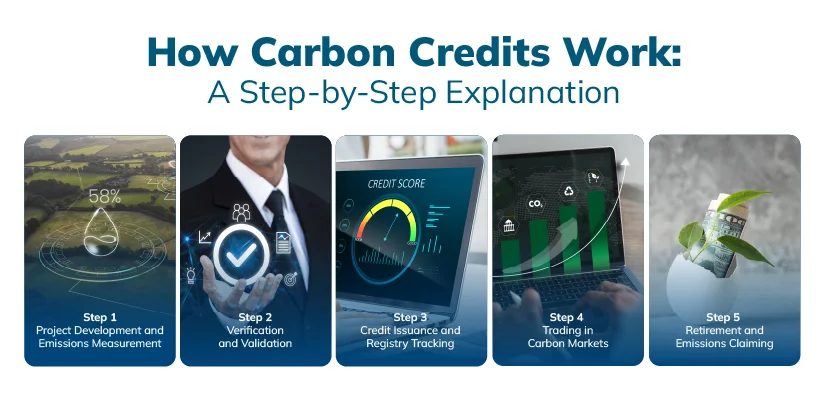
Carbon credits work through a market based mechanism that incentivizes projects reducing or removing greenhouse gas emissions. Verified projects generate credits that enter registries, where they can be traded in carbon credit markets. Once purchased, credits are retired through a controlled process to offset unavoidable emissions while maintaining transparency, auditability, and environmental integrity. Read this […]
What Are Carbon Credits? Meaning, How They Work, Types & Examples

Carbon credits are tradable certificates created to help organizations manage emissions they cannot fully reduce today. One credit equals one metric ton of carbon dioxide equivalent (CO₂e) and comes from verified projects that reduce or remove emissions. Companies buy these credits to offset or inset unavoidable emissions, and each credit is recorded in a registry […]