
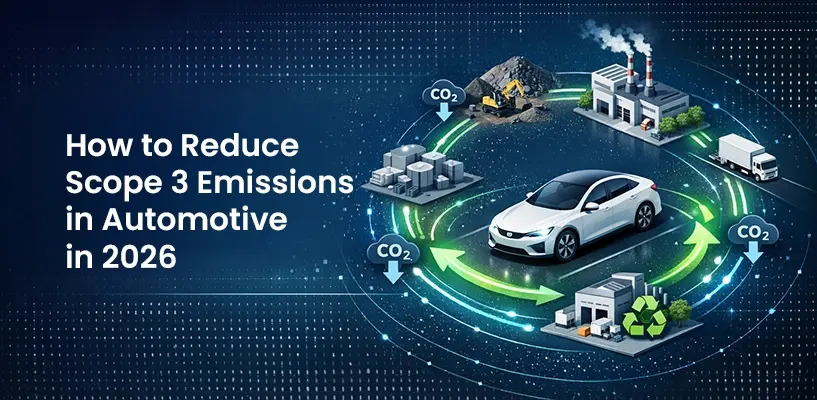
Reducing Scope 3 emissions in automotive is not about one department fixing one problem. These emissions come from everywhere the vehicle touches before and after manufacturing. Raw materials, supplier factories, transport of parts, how the vehicle is used, and how it is dismantled at end of life all add to this footprint.
Because these activities can form up to 90 to 98 percent of total vehicle lifecycle emissions, companies cannot rely on plant level improvements alone. They need visibility into supplier practices, material origins, logistics movement, and recycling outcomes. Clear data and traceable records across this chain make real Scope 3 reduction possible.
What Are Scope 3 Emissions in the Automotive Industry?
Automotive Scope 3 emissions occur outside factory boundaries but are directly connected to the vehicle lifecycle. These emissions arise before components reach the assembly line and continue after the vehicle is sold and eventually dismantled. Understanding where these emissions sit helps clarify how to reduce Scope 3 emissions in automotive through supply chain and lifecycle strategies.
Upstream and downstream activities
Upstream emissions occur before manufacturing begins and include material extraction and supplier production. Downstream emissions occur after the vehicle leaves the plant and include use phase and end of life handling. Both ends of the chain contribute to overall automotive Scope 3 emissions.
Raw material extraction
Production of steel, aluminum, plastics, and battery minerals requires large amounts of energy. These materials carry embedded emissions before they enter the automotive supply chain.
Component manufacturing
Suppliers manufacture batteries, electronics, and mechanical parts using their own energy sources and processes. These activities form a major portion of supply chain decarbonization automotive efforts.
Logistics movement
Global movement of materials, components, and finished vehicles adds emissions through fuel consumption during transport across road, rail, sea, and air networks.
Vehicle use phase
Emissions continue during the operational life of the vehicle through fuel or electricity consumption, which forms a downstream part of vehicle lifecycle emissions.
End of life handling
Dismantling and recycling determine whether materials are recovered or wasted. Recovery through a registered vehicle scrapping facility lowers emissions linked to fresh material production and aligns with the vehicle scrappage policy in India.
| Scope 3 Area | Automotive Example |
| Purchased materials | Steel, aluminum, plastics |
| Components | Batteries, electronics |
| Logistics | Global shipping |
| Use phase | Fuel or electricity use |
| End of life | Recycling, disposal |
Why Scope 3 Represents the Largest Emissions Opportunity for Automakers
Automotive Scope 3 emissions cover activities across the entire vehicle lifecycle, from material extraction to vehicle use and final recycling. Because these emissions sit outside direct factory operations, they are often underestimated. In reality, they represent the largest opportunity for meaningful reduction and are central to how to reduce scope 3 emissions in automotive strategies.
Downstream use phase domination
For most automakers, the use phase of sold vehicles forms the single largest source of emissions.
- Tailpipe emissions from petrol and diesel vehicles over their lifetime can contribute 70 to 80 percent of total impact
- Transitioning fleets from ICE vehicles to EVs directly reduces this dominant category
- Vehicle efficiency improvements reduce lifetime fuel consumption and emissions
Upstream supply chain challenge
As vehicles electrify, embedded emissions in materials become more visible within automotive Scope 3 emissions.
- Production of steel, aluminum, and batteries carries high embedded carbon
- Sourcing green steel and low carbon battery materials reduces upstream emissions
- Circular material usage reduces dependence on primary extraction
Massive lifecycle impact potential
Scope 3 covers nearly the entire vehicle lifecycle, making it critical for net zero pathways.
- Ignoring Scope 3 makes true net zero unachievable
- Addressing it means influencing almost 100 percent of emissions exposure
- Supplier engagement becomes a primary lever for reduction
Key areas for opportunity
- Transition to electric vehicles to reduce use phase emissions
- Shift to recycled metals and circular battery systems to reduce purchased goods emissions
- Collaborate with suppliers to adopt renewable energy and cleaner manufacturing practices
How to Reduce Scope 3 Emissions in The Automotive Industry?
Reducing automotive Scope 3 emissions requires systematic action across procurement, material choices, logistics planning, vehicle design, and data systems. These scope 3 carbon reduction strategies connect operational decisions with emissions reporting across the full vehicle lifecycle rather than treating emissions as an isolated reporting exercise.
Supplier Engagement and Sustainable Procurement
Supplier facilities consume energy, process raw materials, and manufacture components long before assembly begins. These upstream activities define a large share of embedded emissions within vehicles. Procurement decisions therefore become emissions decisions, influencing how materials are produced and how energy is used across the supply chain.
Setting supplier level emissions targets, encouraging renewable electricity adoption, embedding ESG criteria into contracts, and enabling structured data sharing improves visibility into upstream emissions. This approach strengthens a sustainable automotive supply chain while giving manufacturers measurable levers to reduce Scope 3 exposure.
Supplier targets and energy sourcing
- Define emissions intensity expectations for key suppliers
- Encourage transition toward renewable electricity in supplier plants
- Integrate emissions reporting into supplier evaluation processes
Suppliers that shift their production energy mix directly lower the embedded carbon in components before they reach assembly lines.
Material Innovation and Circular Economy
Material selection determines how much carbon is embedded in a vehicle before it is even driven. Steel, aluminum, plastics, and battery materials carry emissions from extraction and processing. Shifting toward recycled inputs and designing vehicles for easier recovery reduces this embedded footprint across the vehicle lifecycle.
Circular material strategies reduce dependence on virgin resource extraction. ELV recovery routed through a registered vehicle scrapping facility ensures that recovered metals and components re-enter manufacturing supply chains with traceable records that support emissions reporting.
Recycled inputs and design for recovery
- Use recycled aluminum and steel in body and chassis components
- Design parts for easier dismantling and material separation
- Recover materials through ELV routing and elv carbon credits systems
These steps lower upstream emissions while improving end of life recovery efficiency.
Logistics and Distribution Optimization
Movement of materials and finished vehicles across geographies adds emissions that are often overlooked. Fuel consumption in road freight, air cargo, and shipping contributes significantly to automotive Scope 3 emissions.
Optimizing routes, reducing packaging weight, consolidating shipments, and shifting transport modes from road to rail or sea reduces fuel use across logistics networks and supports supply chain decarbonization automotive efforts.
Modal and route efficiency
- Prefer rail and sea freight for long distance transport
- Reduce empty runs and idle time in transit
- Use packaging that improves space utilization
Logistics planning directly influences emissions intensity across global supply chains.
Product Design and Use Phase Emissions
Vehicle design decisions influence emissions during the operational life of the vehicle. Efficiency improvements, lightweight structures, battery optimization, and software driven energy management reduce emissions generated during vehicle use.
As fleets transition toward electric vehicles, the focus shifts to reducing battery material footprint and improving energy efficiency during operation to lower overall vehicle lifecycle emissions.
Design for operational efficiency
- Lightweight components to reduce energy demand
- Battery systems optimized for lower material intensity
- Software controls that improve energy usage patterns
Design choices made early in development affect emissions for years after the vehicle is sold.
Data Transparency, Measurement, and Traceability
Reducing Scope 3 emissions requires accurate knowledge of where emissions occur. Tier level supplier visibility, audit ready documentation, and real time operational records reduce reporting gaps and improve risk management.
Traceable data across materials, logistics, and recycling stages supports credible automotive Scope 3 emissions reporting aligned with actual operational activities.
Tier visibility and auditability
- Map emissions across supplier tiers
- Maintain consistent documentation for audit reviews
- Integrate real time data from operations into reporting systems
Data continuity across the lifecycle strengthens emissions accountability.
H2: Role of Carbon Credits in Managing Residual Scope 3 Emissions
Even after focused action across suppliers, materials, logistics, and product design, a portion of automotive Scope 3 emissions remains tied to activities that cannot be removed quickly. Carbon credits are used at this stage as a last mile reduction tool to manage these residual emissions while deeper supply chain and lifecycle transitions continue.
Neutralizing hard to remove emissions
After substantial reductions across the value chain, the remaining emissions come from sources that are technically or operationally difficult to address in the short term. High quality removal credits are applied to balance this final portion without overstating internal progress.
These credits support carbon removal activities such as reforestation and engineered capture, allowing emissions reporting to align with net zero objectives while reduction work continues.
- Applied only after significant internal reduction
- Used for emissions that are currently unavoidable
- Supports balanced and defensible emissions reporting
Acting on emissions outside immediate control
Supplier practices, global logistics systems, and vehicle use patterns cannot be changed instantly. Credits provide a structured way to take responsibility for these emissions while long term improvements across the supply chain are still in progress.
- Addresses emissions from supplier and use phase activities
- Provides an interim mechanism for accountability
- Maintains continuity in Scope 3 reporting
Supporting verified mitigation beyond the value chain
Investment in credits directs funding toward verified projects such as renewable energy and land restoration that deliver measurable results outside the automotive value chain.
- Channels capital into documented mitigation projects
- Extends emissions responsibility beyond operational boundaries
Quality criteria and avoiding greenwashing
Carbon credits must meet strict quality standards to remain credible within automotive Scope 3 emissions reporting.
- Projects must demonstrate additionality and permanence
- Credits must not replace internal reduction efforts
- Removal credits are preferred for long term alignment
- Proper verification prevents misuse and greenwashing
Step summary
- Reduce emissions across suppliers, materials, logistics, and design first
- Identify residual emissions that cannot be eliminated immediately
- Apply high quality removal credits as a last mile reduction step
- Ensure credits meet strong quality and verification criteria
- Continue long term decarbonization across the vehicle lifecycle
Read more about what are carbon credits to learn about its role in automotive scope 3 emissions.
How Digital Traceability Enables Automotive Scope 3 Reduction and How MMCM Supports This?
Automotive Scope 3 emissions are difficult to manage because most of them sit outside direct operational control. Emissions from purchased materials, Tier 2 and Tier 3 suppliers, vehicle use, and end of life handling often rely on industry averages rather than primary data. Regulatory frameworks such as EU ELV rules, CBAM, and CSRD now require granular reporting, making digital traceability essential for credible supply chain decarbonization automotive efforts.
From data gaps to granular visibility
Digital systems shift emissions tracking from estimates to primary data linked to actual materials and processes. Instead of assuming average carbon intensity for steel or batteries, organizations can trace the source, processing method, and movement of each batch across the vehicle lifecycle.
This level of visibility supports accurate automotive Scope 3 emissions reporting tied to real operational activity rather than generic benchmarks.
Digital product passports and lifecycle records
- Digital records capture material composition of vehicles
- Lifecycle data supports easier dismantling and recovery at end of life
- Records travel with the vehicle from production to recycling
Role of dMRV and immutable records
Digital measurement, reporting, and verification ensures that carbon data remains consistent, time stamped, and audit ready. Blockchain supported records prevent alteration of emissions data and strengthen trust in Scope 3 disclosures.
Audit ready emissions evidence
- Immutable operational logs linked to material recovery
- Consistent records across suppliers, logistics, and recycling stages
MMCM as a circularity orchestrator
MMCM connects registered vehicle scrapping facility networks with manufacturers to create a closed loop between end of life vehicles and new material sourcing. Through DigiELV, legal traceability of scrapped vehicles is maintained via Certificate of Deposit trading. Through AutoLoop, RVSFs generate detailed material maps showing what metals and components are recovered.
This ecosystem allows manufacturers to replace virgin material inputs with recycled outputs, directly lowering Category 1 purchased goods emissions.
Material map and resource recovery
- Identification of recoverable steel, aluminum, and plastics
- Integration of recycled materials back into manufacturing supply chains
Read more about end-to-end solution for rvsf to learn about MMCM’s contribution to the said process in detail
End of life valorization and emissions accounting
A scrapped vehicle becomes a measurable source of recoverable material rather than waste. For every one ton of responsibly recycled vehicle material, around 0.6 tons of CO2e savings can be quantified through documented recovery records supported by more than forty dMRV data points.
Trust and transparency in Scope 3 claims
- Verified recycling records prevent overstatement of emissions reductions
- Data continuity reduces risk of greenwashing in Scope 3 reporting
| Aspect | Role of Digital Traceability | MMCM Support |
| Data integrity | Immutable and audit ready records | Uses forty plus dMRV points for ELV verification |
| Material sourcing | Tracks recycled versus virgin inputs | Connects suppliers to recovered raw materials |
| End of life | Records dismantling and recovery paths | DigiELV ensures legal traceability |
| Carbon accounting | Quantifies avoided emissions | Generates circularity linked carbon credits |
Read more about how companies achieve net zero targets to learn more about the overall market understanding around the subject and how you can leverage the know-how to make the most of it.
Conclusion
Reducing Scope 3 emissions in automotive is less about isolated initiatives and more about connecting decisions made across procurement, material selection, logistics planning, vehicle engineering, and end of life handling into one continuous lifecycle chain.
Procurement teams influence embedded emissions through supplier choices. Engineering teams determine how materials can be recovered later. Logistics teams shape transport emissions through routing and mode selection. Recycling outcomes at end of life determine whether materials return to production or require fresh extraction. Each function affects the overall emissions profile even though none of them individually “own” Scope 3.
When supplier data, operational records, material recovery evidence, and emissions reporting systems align, organizations move from estimated Scope 3 numbers to defensible, audit ready lifecycle emissions accounting that supports long term net zero pathways.
FAQs:
What are Scope 3 emissions in the automotive industry?
Scope 3 emissions include emissions from raw material extraction, supplier manufacturing, component production, logistics movement, vehicle use by customers, and end of life recycling beyond direct factory operations.
Why do Scope 3 emissions represent most automotive emissions?
They span the entire vehicle lifecycle from materials to disposal, often exceeding emissions generated inside plants, especially from fuel use, batteries, steel, aluminum, and supplier energy consumption.
How can automakers influence supplier emissions?
Automakers influence suppliers through procurement standards, renewable energy expectations, emissions reporting requirements, material sourcing policies, and long term contracts tied to environmental performance.
What materials contribute most to Scope 3 emissions?
Steel, aluminum, plastics, battery minerals, and electronic components contribute heavily due to energy intensive extraction, refining, and processing before entering vehicle production.
How does recycling reduce Scope 3 emissions?
Recycling returns metals and materials to manufacturing, reducing the need for new extraction and lowering embedded emissions associated with producing virgin raw materials.
How can logistics emissions be reduced?
Route optimization, modal shifts from road to rail or sea, reduced packaging weight, and consolidated shipments reduce fuel consumption across global automotive supply chains.
What data is needed to track Scope 3 emissions?
Supplier energy data, material sourcing records, logistics fuel consumption, vehicle use patterns, and recycling documentation are required for accurate Scope 3 emissions accounting.
Are carbon credits valid for Scope 3 reporting?
Yes, when used after reduction efforts and supported by verified registries, documentation, and proper retirement to address residual emissions that cannot be eliminated immediately.
What regulations require Scope 3 disclosure?
Frameworks such as CSRD, CBAM, EU ELV rules, and various ESG reporting standards increasingly require companies to disclose detailed Scope 3 emissions data.
How long does Scope 3 reduction take?
Scope 3 reduction is gradual and depends on supplier alignment, material changes, logistics improvements, vehicle design updates, and maturity of emissions tracking systems.