
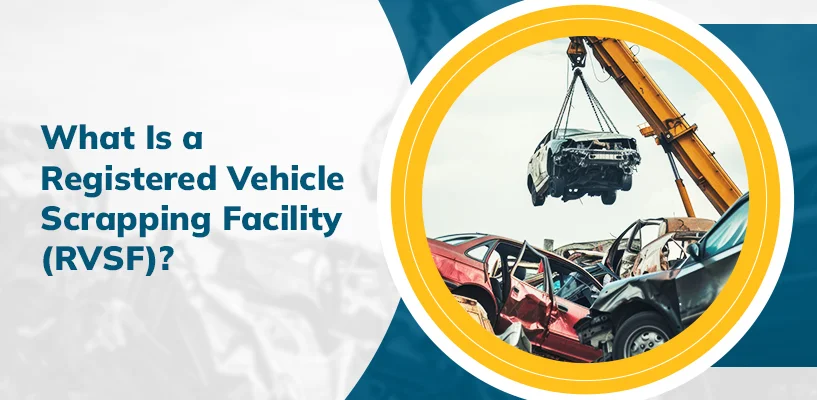
A Registered Vehicle Scrapping Facility is a government authorized facility that safely dismantles end of life vehicles under the Motor Vehicles (Registration and Functions of Vehicle Scrapping Facility) Rules, 2021. These facilities verify ownership, carry out de-pollution, recover recyclable materials, and issue a Certificate of Deposit or Destruction. The certificate enables legal vehicle deregistration and supports compliance, recycling, and environmental accountability.
What Does RVSF Mean?
A Registered Vehicle Scrapping Facility is the only legally permitted route for dismantling vehicles that have reached the end of their usable life. Under the vehicle scrapping policy India, these facilities are empowered to receive vehicles, verify ownership, carry out controlled dismantling, and manage end of life vehicle recycling within prescribed environmental and safety limits. Their authority extends to issuing official documentation required to remove a vehicle from active registration records.
Why Registered Vehicle Scrapping Facilities Exist?
Registered Vehicle Scrapping Facilities were created to address safety, environmental, and compliance gaps in the informal scrapping ecosystem. Their role is defined by policy objectives rather than commercial outcomes.
Key reasons for introducing RVSFs
- Reduction of air, soil, and water pollution caused by unmanaged vehicle waste
- Improvement in road safety by removing unfit vehicles from circulation
- Support for circular economy through structured material recovery
- Replacement of informal scrapping with authorized vehicle scrapping
- Establishment of traceability and compliance across vehicle disposal
These objectives collectively explain what is a registered vehicle scrapping facility within the national policy framework.
How a Registered Vehicle Scrapping Facility Works?
A Registered Vehicle Scrapping Facility follows a controlled operational process designed to ensure safety, traceability, and regulatory compliance across the full vehicle disposal lifecycle.
Vehicle intake and ownership verification
The facility verifies vehicle ownership using registration records and identity documents. This step ensures legal eligibility for scrapping under RVSF rules. After the vehicle intake, the RVSF issues a Certificate of Deposit (CD/CoD) to the vehicle owner.
De pollution process
All hazardous components such as oils, coolants, batteries, and airbags are removed using approved procedures. De pollution prevents environmental contamination during dismantling.
Dismantling and material recovery
Vehicles are dismantled systematically. Reusable parts are separated, and recyclable materials such as steel, aluminum, and plastics are recovered for downstream processing.
Documentation and certification
After dismantling, the facility issues a Certificate of Vehicle Scrapping (CVS). This document enables deregistration and closes the vehicle ownership lifecycle.
Data reporting and compliance
Scrapping data is reported to relevant authorities and integrated with national systems for audit and traceability.
RVSF operational stages
| Stage | What Happens |
| Intake | Vehicle and ownership verified |
| De pollution | Hazardous fluids safely removed |
| Dismantling | Parts and materials separated |
| Recycling | Metals and components recovered |
| Certification | Certificate issued for deregistration |
Regulatory Framework Governing RVSFs in India
Registered Vehicle Scrapping Facilities operate under a multi layer regulatory framework designed to ensure legal certainty, environmental protection, and traceability across end of life vehicle recycling. This framework brings vehicle disposal under formal oversight and replaces informal scrapping with standardized, auditable processes.
Key regulatory components
Vehicle Scrappage Policy, 2021
The Vehicle Scrappage Policy, 2021 regulated by the Ministry of Road, Transport and Highways (MoRTH), aims to phase out old, polluting vehicles by enforcing mandatory fitness tests for commercial vehicles over 15 years and passenger vehicles over 20 years. Vehicles failing tests must be scrapped at Registered Vehicle Scrapping Facilities (RVSFs).
Central Motor Vehicle Rules, 1989
These rules establish the legal basis for setting up and operating a Registered Vehicle Scrapping Facility. They define eligibility criteria, operational responsibilities, certification requirements, and compliance obligations for authorized vehicle scrapping entities.
Automotive Industry Standard (AIS-129)
AIS-129 lays down technical and operational requirements for RVSFs. This standard covers infrastructure, de-pollution process, safety measures, equipment, and record-keeping by the RVSFs.
Authorization by State Transport Authorities
RVSFs must obtain approval (RVSF license) from the respective state or union territory transport department. This authorization governs facility location, capacity, and operational scope, and is subject to renewal and inspection.
VAHAN System Integration
RVSFs must integrate with the VAHAN database to verify vehicle records, check outstanding dues, issue digital certificates, and complete deregistration. This ensures traceability and prevents misuse of scrapped vehicle identities.
Record Retention and Audit Requirements
Facilities are required to maintain physical and digital records related to vehicle intake, dismantling, and certification for prescribed periods. These records support regulatory audits and compliance reviews.
Periodic Inspections
Authorized agencies conduct inspections to verify adherence to operational, environmental, and reporting standards. Non-compliance can result in penalties or suspension of authorization.
Together, these controls define how end of life vehicle recycling is regulated in India and clarify what is registered vehicle scrapping facility from a legal and operational perspective.
Read more about What Are Carbon Credits to understand the importance behind why vehicle scrapping should be done under authorized facilities.
Authorized RVSFs vs Unauthorized Scrappers
The difference between authorized vehicle scrapping and informal dismantling is not limited to legality. It affects ownership closure, environmental liability, data integrity, and long term compliance exposure for vehicle owners, fleet operators, and insurers. Unauthorized scrapping often shifts risk back to the owner even after physical disposal of the vehicle.
Comparison of scrapping practices
| Aspect | Authorized RVSF | Unauthorized Scrapper |
| Legal recognition | Approved under Motor Vehicles Rules and licensed by State Transport Authority | Operates outside legal framework with no formal approval |
| Vehicle deregistration | Completed through VAHAN using valid certificates | Cannot complete deregistration, vehicle remains active in records |
| Ownership closure | Legal ownership is formally terminated | Ownership often remains linked to original owner |
| Certificate issued | Certificate of Deposit and Certificate of Vehicle Scrapping issued | No legally valid certificate provided |
| Environmental controls | Mandatory de pollution and waste handling under CPCB and SPCB norms | Hazardous fluids often drained informally without controls |
| Traceability | Full chain of custody recorded digitally | No traceability once vehicle leaves owner |
| Liability exposure | Liability ends after deregistration | Owner may face liability for misuse, illegal resale, or environmental harm |
| Compliance audits | Subject to inspections and audits | No oversight or accountability |
| Data misuse risk | Vehicle identity securely retired | Risk of chassis number reuse or illegal circulation |
This comparison explains why authorized vehicle scrapping is central to compliance, environmental protection, and risk management, not just regulatory formality.
Benefits of Using a Registered Vehicle Scrapping Facility
Using a Registered Vehicle Scrapping Facility is the only compliant way to dispose of an end of life vehicle under Indian law. Beyond regulatory compliance, RVSFs deliver measurable financial value, environmental protection, and legal certainty for individual owners and organizations.
Legal compliance and ownership closure
RVSFs ensure complete and permanent deregistration of vehicles from official records. Ownership is legally closed through certificates issued by the facility, which prevents future liabilities linked to misuse, accidents, or environmental violations. This closure is critical for fleet owners and individuals seeking protection from downstream legal exposure.
Financial incentives and cost savings
Vehicle owners receive fair market value for scrap materials, typically a percentage of the original vehicle price. Presentation of the Certificate of Deposit enables waiver of registration fees for new vehicles and access to road tax concessions offered by state governments. Manufacturers may also extend purchase discounts. Replacing older vehicles reduces long term maintenance and fuel costs.
Environmental protection and resource efficiency
RVSFs follow regulated de pollution and recycling processes that prevent leakage of hazardous fluids and ensure safe disposal of batteries and oils. Recovery of metals and components reduces reliance on virgin resource extraction and lowers lifecycle emissions. These outcomes support broader climate accounting principles explained in how carbon credits work.
Traceability and audit readiness
Every stage of the scrapping process is documented and recorded digitally. This traceability supports audits, regulatory reporting, and sustainability disclosures. For organizations, verified records strengthen internal controls and external compliance reviews.
Road safety and risk reduction
Removing old and mechanically unfit vehicles lowers the risk of road accidents caused by equipment failure. Authorized scrapping also eliminates the risk of vehicles re entering circulation through informal channels, reducing safety and compliance risks across transport systems.
How RVSFs Support Sustainability and Carbon Reduction?
Registered Vehicle Scrapping Facilities support sustainability by bringing end of life vehicle handling into a regulated and traceable system. Their impact is measured across material recovery, emissions reduction, and lifecycle accountability rather than simple disposal outcomes.
Material recovery and circular resource use
RVSFs recover steel, aluminum, copper, plastics, and rubber through controlled dismantling and recycling processes. Recycled metals require far less energy than primary production, which reduces industrial emissions and demand for virgin mining. This structured end of life vehicle recycling strengthens circular economy practices across the automotive value chain.
Lifecycle emissions reduction
Older vehicles typically have higher fuel consumption and weaker emission controls. Removing them from circulation reduces tailpipe emissions, while recycling materials lowers upstream emissions linked to extraction and processing. Together, these effects reduce total lifecycle emissions associated with vehicle production and use.
Traceability and climate accountability
RVSFs generate verified data across vehicle intake, dismantling, and material recovery stages. This traceability allows organizations to connect scrappage outcomes with measurable environmental impact and supports mechanisms such as elv carbon credits, where documented recycling outcomes contribute to structured climate reporting and accountability.
How Organizations Can Digitally Manage RVSF Operations and Traceability and How MMCM Supports This?
RVSF operations involve regulated vehicle intake, controlled dismantling, hazardous material handling, inventory reconciliation, certificate issuance, and statutory reporting. Managing these activities at scale requires digital systems that enforce process discipline, maintain data integrity, and support regulatory audits.
Centralized operational data management
RVSF operations generate high volume transactional data across intake, dismantling, material segregation, and certification stages. Fragmented tracking increases compliance risk and reporting errors.
A centralized system captures ELV intake records, job card status, dismantling stage completion, processing duration per vehicle, and material output quantities. This enables real time operational monitoring, throughput analysis, and exception tracking across scrapping lines without manual reconciliation.
Role based access control and activity segregation
RVSFs operate with multiple functional roles including intake verification, dismantling supervisors, inventory handlers, compliance officers, and administrators. Unrestricted access increases the risk of data manipulation and procedural deviations.
Role based access ensures users can only create, modify, or approve records relevant to their assigned function. This segregation of duties supports internal controls, reduces unauthorized actions, and aligns with audit expectations for regulated facilities.
Integrated compliance, inventory, and reporting workflows
RVSF compliance extends beyond physical scrapping to documentation, reporting, and record retention.
Digital platforms integrate workshop operations, material inventory management, certificate generation, and statutory reporting into a single workflow. Data captured during dismantling feeds directly into Certificate of Deposit and Certificate of Vehicle Scrapping issuance, inventory reconciliation, and compliance reports. This reduces manual duplication, improves traceability, and supports audit readiness.
MMCM supports this operational model through AUTOLOOP, an Automotive Upcycling Technology and Optimal Lifecycle Operation Program that enables structured digital execution of RVSF workflows, controlled access management, traceable material recovery records, and centralized compliance documentation through an end-to-end solution for rvsf.
Conclusion
Registered Vehicle Scrapping Facilities exist because vehicle disposal cannot be left to informal systems. Under India’s regulatory framework, RVSFs are the mechanism through which end of life vehicles are legally exited from circulation, environmentally processed, and closed in official records.
For organizations handling fleets, compliance obligations, or sustainability disclosures, RVSFs serve a practical function. They create traceable disposal outcomes, control environmental risk, and provide defensible records for audits and reporting.
Material recovery through authorized scrapping feeds directly into circular economy objectives and reduces emissions tied to inefficient vehicles and primary material production. In this context, RVSFs are not an optional layer. They are part of how regulated mobility systems function.
FAQs
RVSF stands for Registered Vehicle Scrapping Facility. It is a facility authorized by government authorities to dismantle and recycle end of life vehicles. RVSFs operate under defined rules covering vehicle intake, de pollution, dismantling, recycling, and issuance of certificates required for legal deregistration.
A Registered Vehicle Scrapping Facility is authorized by the State or Union Territory Transport Authority. Authorization is issued under rules notified by the Ministry of Road Transport and Highways. Environmental approvals from the Central or State Pollution Control Board are also mandatory before operations begin.
Yes. Deregistration of an end of life vehicle requires scrapping through an authorized RVSF. Vehicles dismantled outside this framework cannot be legally removed from official records. Without an RVSF issued certificate, ownership closure and deregistration through VAHAN are not permitted.
An RVSF issues a Certificate of Deposit when the vehicle is accepted and a Certificate of Vehicle Scrapping after dismantling is completed. These documents are required for deregistration in VAHAN and for claiming any incentives or benefits linked to the vehicle scrappage policy.
Authorization can be verified through official state transport department listings or government portals related to vehicle scrappage. An authorized RVSF will also be integrated with the VAHAN system and able to issue valid digital certificates linked to vehicle deregistration records.
After intake, the vehicle undergoes de pollution where fluids, batteries, and hazardous components are removed. It is then dismantled, and materials such as metals, glass,plastics and other materials are segregated for recycling, according to environmental regulations
Yes. RVSFs must comply with environmental norms issued by the Central Pollution Control Board and State Pollution Control Boards. These norms cover hazardous waste handling, storage, disposal, emissions control, and record keeping. Compliance is monitored through inspections and audits.
Yes. Businesses commonly use RVSFs to dispose of fleet vehicles in a compliant manner. RVSFs support bulk vehicle intake, proper documentation, deregistration, and record retention, which is important for corporate compliance, audit requirements, and sustainability reporting.
RVSFs recover metals and components through controlled dismantling and recycling processes. Recovered materials re enter manufacturing supply chains, reducing demand for virgin resources. This supports circular economy objectives by extending material use and lowering energy and emissions linked to primary production.
RVSF is specific to India and operates under Indian vehicle scrappage regulations. Other countries follow different legal frameworks for vehicle disposal and recycling. While principles and facilities may be similar, RVSF authorization and certificates are not valid outside India.