
Waste management has traditionally been treated as a municipal responsibility. Products are manufactured, sold, consumed, and eventually discarded, leaving local authorities to deal with the environmental impact. As consumption volumes increased and materials became more complex, this approach began to fail. Municipal systems alone cannot manage the growing streams of plastic packaging, electronic equipment, batteries, and other high-impact waste categories.
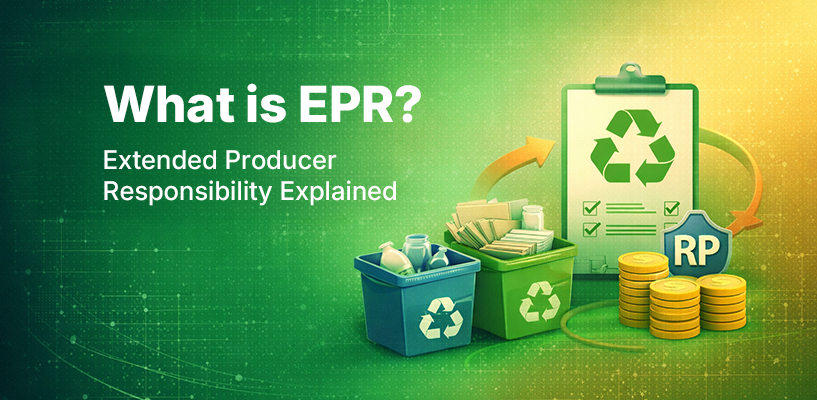
Extended Producer Responsibility (EPR) is a regulatory and environmental policy framework that shifts post-consumer waste responsibility from municipalities to the companies that introduce products into the market. Under this model, producers, importers, and brand owners remain accountable for the environmental management of their products even after consumer use.
Rather than treating waste as an external outcome, EPR connects production, consumption, and disposal within a single accountability chain. Companies must ensure that materials introduced into the market are eventually collected, recycled, or processed through authorised waste management systems.
What Does Extended Producer Responsibility Mean?
The extended producer responsibility meaning is rooted in lifecycle management.
Under EPR, a producer’s responsibility does not end with manufacturing or sale. Accountability extends until the product reaches environmentally sound recycling or disposal. This framework introduces three operational responsibilities.
- Market Introduction Accounting: Companies must report the quantity of regulated materials they introduce into the market each year.
- Waste Recovery Obligation: For every unit introduced, an equivalent quantity must be recovered and recycled through authorised recyclers or recovery systems.
- Compliance Monitoring: Recycling performance, recovery credits, and waste processing data are tracked through regulatory reporting systems.
The objective is to ensure that materials entering the economy must eventually return to the recycling ecosystem instead of accumulating in landfills or informal waste streams.
Benefits of Extended Producer Responsibility
The introduction of EPR waste management systems creates measurable environmental and operational improvements across the product lifecycle. Instead of treating waste as an external outcome of consumption, the framework integrates environmental responsibility into manufacturing and supply chain operations.
1. Reduced Environmental Pollution
When producers track post-consumer waste, materials are more likely to move through authorised recycling systems rather than informal disposal channels.
2. Improved Recycling Infrastructure
EPR programmes support organised recycling networks by creating a steady material supply for authorised recyclers and processors.
3. Better Product Design
Companies begin using recyclable materials, simpler packaging, and components that are easier to recover and recycle.
4. Shared Responsibility Across Supply Chains
Extended producer responsibility rules distribute waste management duties across producers, recyclers, logistics providers, and waste processors, ensuring materials introduced into the market are eventually recovered.
Products Covered Under EPR
Extended Producer Responsibility frameworks focus on waste streams that generate high volumes or require specialised recycling processes. These categories often contain materials that can be recovered and reintroduced into manufacturing cycles.
- Plastic Packaging: One of the largest regulated waste streams under EPR compliance India. It includes rigid plastics, flexible packaging, multilayer plastics, and compostable materials that must be collected and recycled through authorised systems.
- Electronic Waste (E-Waste): Devices such as computers, smartphones, televisions, and appliances contain metals and components that require controlled dismantling and recycling.
- Batteries and Electrical Equipment: Batteries contain materials like lithium, cobalt, and lead that require safe recovery through regulated recycling processes.
- Tyres and Rubber Materials: Waste tyres are recycled into crumb rubber, industrial inputs, and construction materials through authorised recycling facilities.
Some industries are already integrating these recovery streams into broader sustainability strategies such as circular economy models in the automotive industry, where recovered materials re-enter production cycles.
Role of EPR in Supporting Circular Economy
One of the most important outcomes of EPR is its contribution to EPR circular economy systems. Circular models focus on keeping materials in use for longer periods through reuse, repair, refurbishment, and recycling.
- Resource Efficiency Through Recycling: EPR ensures that plastics, metals, rubber, and other materials introduced into the market eventually move back into recycling streams, reducing reliance on virgin raw materials.
- Design for Recyclability: When producers are responsible for waste recovery, product design often shifts toward materials and components that are easier to recycle and process.
- Reduced Landfill Waste: Structured recovery systems redirect materials away from landfills and back into recycling networks.
These circular frameworks also align with environmental performance metrics such as Scope 1, 2 and 3 emissions, which measure the environmental impact of industrial production and supply chains.
Businesses seeking formal regulatory recognition under these frameworks must obtain an EPR certificate, which confirms their registration under applicable waste management regulations.
Conclusion
Extended Producer Responsibility changes a simple assumption in waste management. Earlier, once a product was sold, its waste became the city’s problem. Under EPR, the company that puts the product into the market also shares responsibility for what happens to it after use.
As EPR compliance India frameworks expand across industries, the system is slowly connecting production, consumption, and recycling into one loop. That shift supports the broader goal of a circular economy, where materials stay in use longer instead of becoming waste after a single lifecycle.
FAQs
1. What is EPR in environmental policy?
EPR (Extended Producer Responsibility) is an environmental policy that makes producers responsible for managing the waste generated by their products after consumer use. It connects manufacturing with waste recovery by requiring companies to ensure materials they introduce into the market are collected, recycled, or safely processed.
2. What does Extended Producer Responsibility mean?
Extended Producer Responsibility means that companies must take responsibility for the entire lifecycle of their products, including post-consumer waste. Producers, importers, and brand owners must ensure that materials such as packaging, electronics, or batteries are eventually collected and recycled through organised systems.
3. Why is EPR important for waste management?
EPR improves waste management by shifting part of the responsibility from municipalities to producers. When companies are accountable for post-consumer waste, recycling systems become more organised and materials are less likely to end up in landfills or informal disposal channels.
4. Which products fall under EPR regulations?
EPR regulations typically cover waste streams that generate high volumes or require specialised recycling. Common categories include plastic packaging, electronic waste, batteries, electrical equipment, and tyres. These materials contain recoverable resources that can be recycled and reused in manufacturing.
5. How does EPR support the circular economy?
EPR supports circular economy systems by ensuring materials introduced into the market eventually return to recycling networks. Instead of becoming waste, plastics, metals, and other materials are recovered and reused in production, helping industries reduce dependence on virgin raw materials.